Author Archives: Dammann's Garden Center

Indoor Succulent Container Garden

Have you noticed how a container garden can really jazz up a front entryway or sunny room in your home? Perhaps you’ve thought twice about including this addition to your plantscaping because you just don’t have time every day to water.

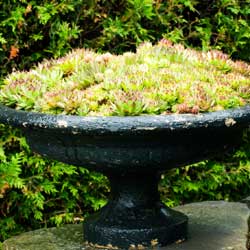
Cheer up! You can plant a container with succulents (plants with fleshy or thickened leaves, stems or roots) and you will not have to worry about watering frequently. Succulent container gardens are relatively carefree, and they’re so easy that you don’t have to limit yourself to just one. If one container makes a statement, several will create a conversation!

Indoor Succulent Container Garden Tips and Tricks

To have the greatest success with your new succulent container garden, consider…

  • Exposure
    Full sun is a must for all succulents and will help show off their subtle colors and textures. If your viewing location has less than adequate sun, place your succulent garden in a full sun area for the majority of the day and move to your desired location when you have company or time to enjoy it yourself. Remember to move it back out into the sun when company leaves.
  • Containers
    Because succulents do not have extensive root systems, your chosen containers may be shallow. Too much soil can hold excessive water causing the succulent’s roots to rot. Perhaps a strawberry pot would make the perfect focal point just inside your front door or on a coffee table.
  • Height
    Think about varying the heights of your containers. Perhaps your containers will require a pedestal or something else for elevation. This could be an inverted pot, a table, shelf or even pot feet. You may even consider hanging your container for elevated elegance. Whatever you choose, it’s important to remember succulents require excellent drainage. Therefore, the containers must have holes.
  • Soil
    All succulents need fast draining soil. Pre-mixed soil is available that is specifically blended for succulent container plantings. You may also use a general all-purpose potting mix and add perlite, coir or sand to increase the drainage sufficiently. We recommend Fertilome Succulent Soil.

Plants for Your Succulent Container Garden

When making your plant selection, it is fun to let your imagination go wild and embrace the full range of amazing succulents available. As a good container gardening rule of thumb, Use a thriller (something stunning to catch the eye), a filler (a sturdy, reliable choice to fill in bare spots) and a spiller (a trailing plant to blur the container edges) and you’ll never go wrong.

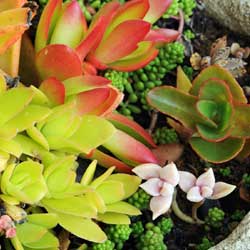
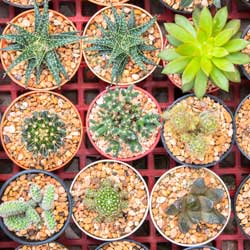
Succulents come in an extensive variety of colors, striking shapes and varying sizes. As when planting any container, evaluate plant color, texture and shape when making your selections. You may feel overwhelmed when choosing your plants. If you can’t decide, here is a simple “recipe” for planting one 16″ container to be seen from all sides. Maybe it will give you some ideas:

  • 1-thriller (Euphorbia tirucalliSticks on Fire‘) planted in the middle.
  • 3-fillers (Kalanchoe blossfeldiana) to surround the thriller and provide texture or color contrast
  • 5-spillers (Sempervivum arachnoideum) to drape over the container’s edge.

As an extra bonus, many succulents bloom, adding extra unexpected beauty. Blooms can be few and far between, however, but they will be exciting and rewarding when they are spotted.

The Importance of Topdressing

After planting, gently brush off any residual soil from the succulents’ leaves. Add more interest by topdressing the container. This is a layer of material will give your container garden a finished appearance. Desert type plants look great with a thin layer of light tan-colored gravel or red lava rocks. Create sparkle with sea-glass toppings or add a clean, contemporary look to Zen-like or Asian inspired plantings with smooth black river stones. Other popular top dressings include glass marbles, colored aquarium gravel or tiny seashells. You might even add a fairy garden surprise in the container, such as a miniature hut, hidden gnome or other quaint character who will call your succulent garden home.

Most importantly, have fun!

Suculent

Suculent

Suculent

Spider Mites

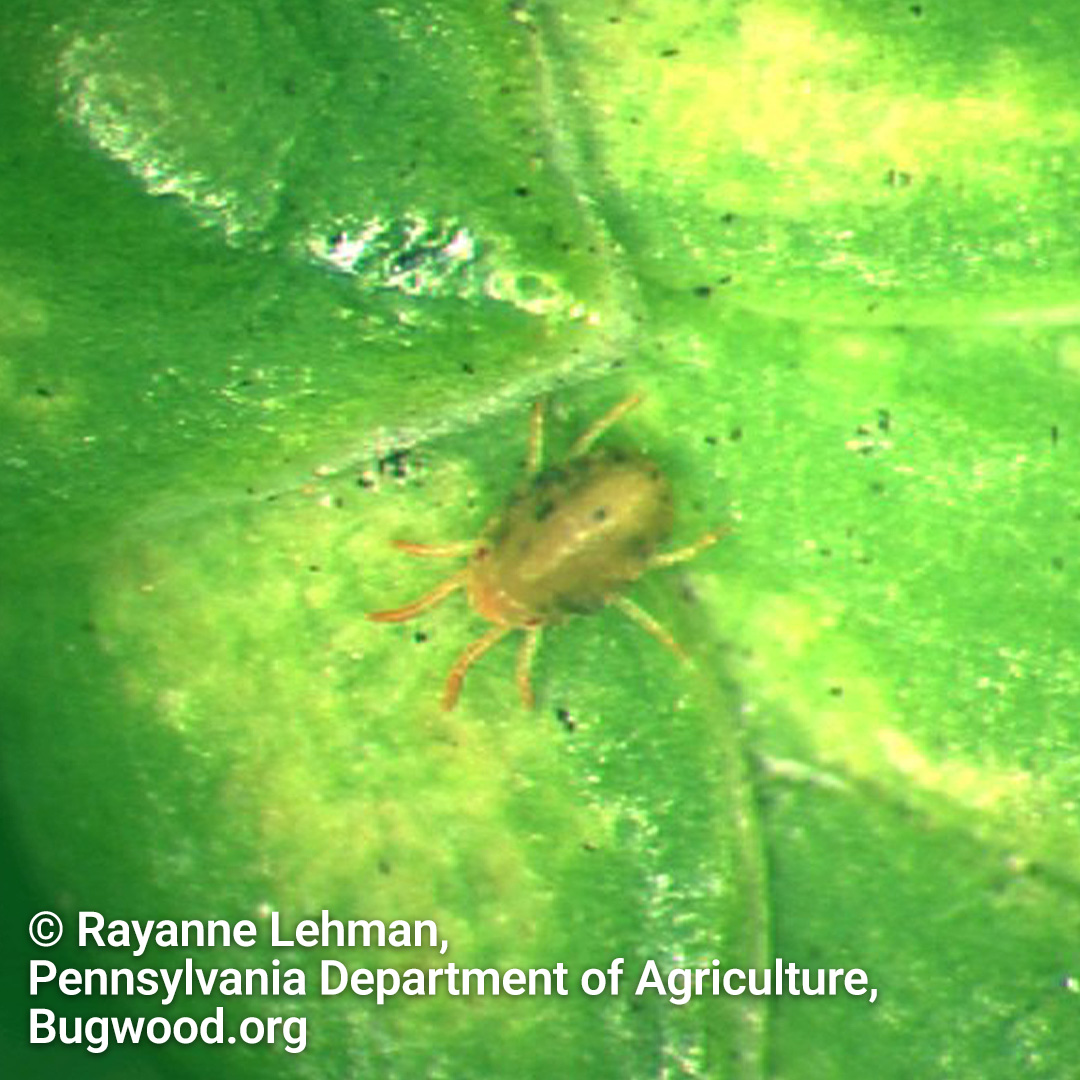
Spider mites are one of the most common pests in landscapes and gardens and feed on many fruit trees, vines, berries, vegetables and ornamental plants, as well as houseplants. These tiny mites are just large enough to be seen with the naked eye, but may just look like tiny, moving dots. For tiny creatures, they can do considerable damage to plants if left unchecked.

How Spider Mites Hurt Plants

Spider mites cause damage by sucking cell fluids from plant leaves. A small number of mites usually isn’t a reason for concern, but plants can sustain heavy damage if populations are high and the infestation spreads. You may notice a stippling of light or yellowish spots on affected leaves and often the webbing of mites can be seen on leaves and stems. As the damage continues, leaves may turn completely yellow, dry up and fall off the plant.

Controlling Spider Mites

Spider mites reproduce rapidly in hot, dry weather, therefore, keeping plants well watered is a good deterrent to heavy infestations. There are also many natural enemies to these pernicious bugs, such as lacewing larvae and some lady beetles that help to keep mite populations under control. Cultivating these helpful insects may be all that is necessary to minimize spider mite activity unless the infestation has already increased and spread.

Because spider mites are too tiny to pick off infected plants, judicious pruning or trimming of infested plants can help remove these pests. In heavy infestations, it may be necessary to discard an entire plant to take the mites with it. Do not put these clippings or removed plants in compost piles, however, or the mites will continue to thrive and will return to healthier plants.

At times, it may be necessary to use chemicals to deter spider mites. Be careful when using broad spectrum insecticides, however, as these will kill any beneficial insects as well as the spider mites, which can disrupt the delicate balance of a garden’s ecology. Simply spraying plant leaves with a blast of water, taking care to spray the undersides as well, can help to reduce mite populations by physically removing the spider mites. Insecticidal soaps and neem oil are also good choices when dealing with spider mites.

Once the mites have been removed, damaged plants may look bedraggled, but they will generally recover within a season or two, especially if the pests were recognized and treated quickly. Don’t let spider mites catch you in their webs – get rid of them today!

Spider Mites

Blossom End Rot

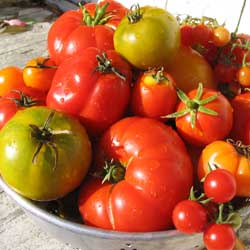
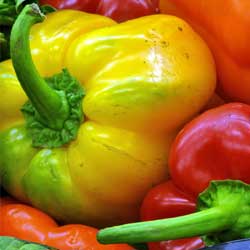
Nothing is more disheartening than grabbing a beautiful tomato only to find the entire bottom is soft, black and rotten. Blossom end rot (BER) affects tomatoes, peppers, eggplant, squash and melons. Caused by insufficient calcium and uneven water during the rapid growth of the plant and its fruit, BER is easily avoidable with the proper precautions.

All vegetables need calcium for healthy development. When tomatoes, peppers, melons and eggplant can’t get enough, the tissues on the blossom end of the fruit break down. By testing your soil to determine its pH and calcium content, regularly watering and curbing fertilizer use, your susceptible veggies should be free of BER.

The best prevention occurs before planting. The soil pH determines the amount of calcium available to a plant. At lower pH levels, less calcium is available for the plant to absorb because it becomes chemically tied up in the soil. Most vegetables grow well in soils with a pH of 6.2-6.8. However, vegetables susceptible to BER require a pH of 6.5-6.8, where more calcium is available and it can be more easily absorbed, especially during rapid growth and fruiting periods. If the pH is lower than 6.5, the crop is likely to develop BER. This can also occur when the pH is correct, but the soil contains an insufficient amount of calcium.

Water fluctuations and excessive fertilizer also affect nutrient absorption. A plant requires water to absorb nutrients. If no water is present, no nutrients can be absorbed, and in addition to blossom end rot, plants may be small and weak as well as more susceptible to other pests, diseases and deficiencies.

Additionally, too much fertilizer can cause a plant to grow so quickly that the nutrient uptake cannot meet the demands of growth, leading to BER. In these cases, the plants grow so rapidly and develop produce so quickly that there isn’t time for the proper nutrient balance to be absorbed, including the right amount of calcium. Because of this accelerated growth and insufficient nutrition for the growth pace, plants will be more susceptible to blossom end rot.

Unfortunately, simply adding calcium to the soil will not stop BER this year, but it can help your soil become better conditioned for next year. However, we do carry several products to help with this year’s crop as well. Easy-to-use calcium sprays can save much of this year’s crop of tomatoes or other vulnerable produce. Come on in and our knowledgeable staff will help you find the best product for your situation, as well as for tips on how to improve your soil’s pH levels, calcium content, moisture retention and overall nutrition so blossom end rot is never a problem in your garden again.

End Rot

End Rot

Small Shrubs for the Perennial Border

Adding structure and an aspect of year-round permanence to any yard, small shrubs are excellent for enhancing the perennial border. Thought of as the spine and bones of good landscaping, small shrubs hold the soft body of flowers together and add consistency between areas. Well-chosen selections integrate with perennials to add interest for more than just one season. Not only do they add support for perennials in late summer but also they provide definition to the bed throughout the year. Though shrubs take longer to reach maturity, their outstanding foliage, lovely flowers and attractive shapes and forms add to the beauty of the garden.

Choose Shrubs That Promise Year-Long Interest

The ideal shrub for the mixed border has outstanding foliage – deep green, purple, gold, silver, or even variegated. Its leaves may be glossy, soft or even fuzzy to touch. Colorful veins or other variations may mark its foliage to seize your interest throughout the seasons. And, certainly, the ideal shrub has flowers. Late-blooming flowers liven up the border during the tired end-of-summer days, while early-blooming varieties add excitement to a garden just bursting into spring. You’ll also want to take into account flower color when working shrubs into a planting scheme. White is a delightful and safe choice because it harmonizes with all other colors. Consider also mellow blues, pinks and other pastel shades to add a peaceful mood to the garden. Bold colors of yellow, orange or red will add a warm, daring feeling and dramatic interest. In fall, colorful leaves cover the ideal shrub before falling to the ground. And in winter, twisted, colorful branches and bright berries provide visual interest even under a layer of frost or snow.

Top Border Shrub Choices

Name Height Interest
Background and Mid-Border Shrubs
Cornus alba cultivars (red twig dogwood)* 8-10 ft. Variegated or golden foliage; red winter branches
Cornus stolonifera cultivars 7-9 ft. Variegated foliage; red or yellow winter branches (red osier dogwood)*
Cotinus coggygria ‘Velvet Cloak’ or ‘Royal Purple’ (Smokebush)* 10-15 ft. Dark purple foliage
Deutzia ‘Mont Rose’ and ‘Magician’ 4-5 ft. and 6-8 ft. Pink spring flowers; graceful, arching habit
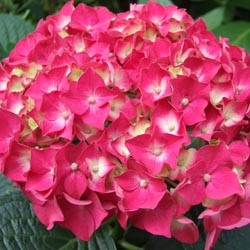
Hydrangea cultivars 4-12 ft. Late summer blue, white or pink flowers, variegated or unusual leaves
Viburnum macrocephalum 6-15 ft. White flowers in spring fading to buff, seed heads
Viburnum plicatum var. momentous 5-10 ft. Bright white lace-cap flowers summer, ‘Summer Snowflake’ (doublefile viburnum)
through fall
Viburnum sargentii ‘Onondaga’ 5-12 ft. Dark green or maroon-tinged foliage; ‘Susquehanna’ (Sargent viburnum) late
spring flowers; bright red winter fruit
Weigela W. florida 4-6 ft. Golden or purple foliage; late spring, ‘White Knight’ and ‘Wine and Roses’ pink
or white flowers
Focal Point Shrubs
Buxus sempervirens ‘Graham Blandy’ (boxwood) 4-6 ft. Narrow, upright habit
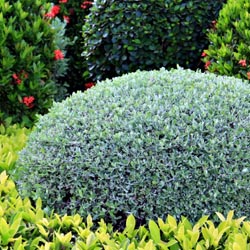
Buxus microphylla cvs. (littleleaf boxwood) 3-4 ft. Dense, rounded shape
Ilex crenata ‘Sky Pencil’ (Japanese holly) 4 ft. Extremely narrow, columnar form
Front-of-the-Border Shrubs
Berberis thunbergii ‘Atropurpurea Nana’, ‘Aurea’ 1-4 ft. Golden or purple foliage; dense, rounded form and ‘Bagatelle’ (Japanese barberry)
Caryopteris clandonensis ‘Worcester Gold’ 2-4 ft. Golden foliage; late summer lavender flowers (blue mist shrub)
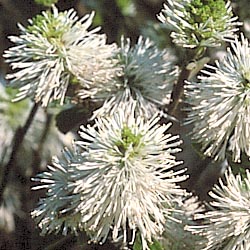
Fothergilla gardenni 2-3 ft. Creamy flowers stick up like bottlebrushes on bare tips in early spring
Hypericum androsaemum ‘Albury Purple’ (tutsan) 2-3 ft. Purple-tinged leaves; yellow summer flowers; red berries
Spiraea japonica (Japanese spiraea) 1-4 ft. Golden foliage; pink spring flowers
Spiraea ‘Goldflame’ 2-3 ft. Pink flowers, red spring leaves tinged with bronze, changing to gold
Symphoricarpos orbiculatus ‘Foliis Variegatis’ 2-5 ft. Yellow-edged variegated leaves (coralberry)

*Prune hard in late winter to control height in mid-border positions.

Shrubs

Shrubs

Shrubs

The Power of Mulching for Gardens and Yards

Imagine stepping into a lush, healthy garden where every plant is thriving, the soil feels rich and cool to the touch, and weeds are nowhere to be seen. What’s the secret behind this picture-perfect scene? Often, you’ll find a thick, tidy layer of mulch at the heart of a flourishing landscape.

At first, mulch may seem like just a finishing touch. Many gardeners, especially beginners, view it as a cosmetic choice that makes flower beds pop. But dig a little deeper (literally and figuratively), and you’ll discover that mulching is one of the most versatile, powerful tools available for anyone who loves their yard. From saving water to feeding the earth, mulching goes well beyond surface-level beauty.

Why Mulch Matters More Than You Think

Mulching does far more than clean up the edges of garden beds. It acts as a multitasking shield for your soil and plants, offering an impressive array of benefits that any homeowner or gardener can appreciate:

  • Moisture Retention: Cuts down on watering by keeping precious moisture locked in.
  • Weed Suppression: Reduces the time and energy you’ll spend pulling pesky weeds.
  • Temperature Regulation: Shields roots from summer heat and winter cold snaps.
  • Nutrient Boost: Organic mulch breaks down to feed your soil naturally.
  • Erosion Control: Keeps valuable topsoil from washing away during heavy rain.
  • Enhanced Visual Appeal: Ties your garden together for a crisp, cohesive look.
  • Pest Mitigation: Some mulches even help deter certain insect pests and diseases.
  • Biodiversity Support: Mulch provides habitat for beneficial insects and microbes.

Moisture Retention: Keep Water Where Your Plants Need It

Water is a lifeline for every garden, but it can be elusive during droughts or hot summers. Mulch provides a powerful barrier against evaporation, allowing water to penetrate the soil while preventing it from escaping as easily. A properly mulched bed needs less frequent watering, which protects roots and saves you time, money, and resources.

  • Tip: Lay mulch after rain or watering to trap existing moisture.
  • Bonus: Less surface water also means fewer muddy shoes and splashes on house siding.

Weed Suppression: Enjoy More Beauty with Less Work

Few things frustrate gardeners like relentless weeds. Mulch directly addresses this pain point by blocking sunlight from weed seeds, reducing both the number and strength of unwanted plants. While it won’t prevent every single weed, a 2-4 inch layer can cut the workload by more than half.

  • Tip: Before adding fresh mulch, pull existing weeds and smooth the soil to set a weed-resistant foundation.
  • Pro Insight: Try double-mulching (using a layer of newspaper or biodegradable weed barrier beneath organic mulch) for especially stubborn areas.

Temperature Regulation: Create a Year-Round Comfort Zone

Wild temperature swings stress even the hardiest plants. Mulch is like a cozy blanket, insulating the ground so roots don’t freeze in winter or bake in summer. This stability is key for perennials and young plants with delicate root systems. You’ll notice more robust and resilient growth, with fewer casualties, following harsh seasons.

  • Tip: Apply mulch in early spring and fall to buffer your plants during seasonal transitions.
  • Real-World Example: At our garden center, we have found that even city gardens with unpredictable microclimates benefit from this protective touch.

Soil Improvement: Feed Your Soil and Fuel Your Garden

Organic mulches are the solution for those looking to nurture the earth as much as their flowers and vegetables. Over time, materials such as shredded bark, straw, compost, or leaves break down, replenishing your soil with valuable nutrients and organic matter. This natural process improves drainage, aeration, and soil structure, leading to healthier roots and more vibrant results.

  • Did you know? Healthy soil attracts beneficial worms and microbes that turbocharge decomposition and plant growth.

Erosion Control: Keep Your Garden Intact

Heavy rains can wash away precious topsoil. Mulch reduces the impact of water runoff and shields bare soil, preventing erosion on slopes, hillsides, and in new plantings. If your yard is on an incline or prone to heavy storms, don’t skip this step!

  • Smart Move: Start mulching bare patches early, even before planting, to stabilize the ground.

Visual Impact: Show Off Your Style

Let’s admit it, a mulched garden just looks incredible. Whether you’re into rustic bark, bold colors, or sleek river stones, mulch sets the tone for your entire landscape. Choose a hue and material that complements your home and plant palette for instant curb appeal.

Types of Mulch- What’s Right for Your Garden

Choosing the ideal mulch depends on many factors, including your plant choices, local climate, soil needs, and personal style. Here’s a deep-dive into common and creative options:

Hardwood Mulch: The All-Purpose Favorite

  • Made From: Shredded bark or wood (often oak or maple).
  • Ideal For: Perennials, trees, shrubs, and general landscaping.
  • Pros: Durable, slow to decompose, great value. Creates a polished, even surface.
  • Tip: Double or triple-ground hardwood is less likely to blow or wash away.

Pine Mulch: A Match for Acid-Loving Plants

  • Made From: Pine bark chunks or needles.
  • Best Use: Around azaleas, blueberries, rhododendrons, or anywhere you want a looser texture.
  • Pros: Lightweight, simple to spread; adds acidity as it breaks down.
  • Watch Out: May float during rain and doesn’t suppress weeds as firmly if not applied thick enough.

Cedar Mulch: Aromatic and Long-Lasting

  • Standout Features: Pleasant smell, naturally deters pests, and resists rot thanks to its oils.
  • Perfect For: High-traffic spots, patios, or beds near decks and seating areas.
  • Benefits: Holds color and structure longer than most organic mulches. Adds a unique scent to outdoor spaces.
  • Downside: Slower breakdown means less immediate soil improvement and higher upfront cost.

Dyed Mulch Adds Drama and Definition

  • Options: Bold reds, deep blacks, or chocolate browns.
  • Why Choose It: Color stays vibrant longer, perfect for making beds pop or defining pathways.
  • Quality Tip: Only purchase from trusted suppliers who use safe, vegetable-based dyes. Verify that the wood source is not from treated pallets or waste.
  • Note: Color will fade over time, but mulch can be refreshed annually.

Natural & Living Mulch: Go Green and Get Creative

  • Natural Mulch: Undyed wood chips, compost, straw, or shredded leaves. Earthy look, improves soil fast.
  • Living Mulch: Low groundcovers like clover or creeping thyme. Suppresses weeds and provides habitat for pollinators.
  • When to Use: Vegetable gardens, wildlife-friendly landscapes, or anywhere you want rapid soil enrichment.

Rubber Mulch & Stone Mulch: Long-Lasting, Low Maintenance

  • Rubber Mulch: Made from recycled tires, great for playgrounds, dog runs, or non-plant areas. Won’t decompose or blow away.
  • Cautions: No soil benefits, may get hot in direct sun, should not be used near edible gardens or delicate plants.
  • Stone or Gravel Mulch: Ideal for arid gardens, around cacti or succulents, or in permanent xeriscape installations. Prevents weed growth and delivers a striking visual contrast.

Specialty Mulches: Uncommon Solutions

  • Cocoa Hulls: Smells like chocolate, breaks down fast, improves soil, but can be toxic to dogs.
  • Straw/Grass Clippings: Superb for veggie beds, boosts fertility fast, but must be free of weed seeds and pesticides.

Tips for the Best Results

  • Start with weed-free, slightly damp soil for optimal application.
  • Spread mulch evenly, 2-4 inches deep, and keep it clear of plant stems or trunks to prevent rot.
  • Replenish mulch as needed, typically once per year; organic mulch will naturally settle and decompose.
  • For sloped areas, try heavier mulches or use edging to keep material in place.
  • Pay special attention to moisture and airflow in humid climates to prevent fungal growth.

Mulch with Purpose and Confidence

Mulching isn’t just a finishing touch; it’s a strategy that pays dividends all season. When you select the right mulch and apply it with care, you save water, reduce weeds, build healthier soil, and instantly improve your garden’s appearance. Whether you’re refreshing your backyard beds or designing a front-yard oasis, mulching adds resilience, style, and sustainability to every corner.

Need help choosing the perfect mulch for your yard? Stop by Dammann’s for friendly expert advice, the widest selection of top-quality mulches, and all the tools you need to mulch like a pro. Your future garden is waiting, and it’s guaranteed to look (and grow) better with the right mulch.

Power of MulchingPower of Mulching

Power of Mulching

Power of Mulching

Selecting the Right Plant for the Right Place

More often than not, our landscape renovation wish lists include the desire for a picturesque, thriving, low-maintenance outdoor space to enjoy year-round for many years to come. Creating a flourishing landscape, however, isn’t simply about picking pretty plants. It’s about understanding your garden’s own unique environmental conditions and matching plant selection to them. This concept, known as “right plant, right place,” is a foundational principle in horticulture that ensures healthier plants, reduced maintenance, more sustainable gardening practices, and, therefore, greater garden longevity and homeowner happiness!

Why Choosing the Right Plant Matters

  • Healthier Plants: When plants are placed in environments suited to their needs, they grow healthier and stronger and are better able to resist pests and diseases.
  • Reduced Maintenance: Plants that thrive in their location require less intervention from the gardener. This translates to less work and more time to enjoy your garden.
  • Resource Efficiency: Using plants adapted to your local conditions means less water and fewer resources are needed, promoting sustainable gardening.
  • Enhanced Aesthetics: A well-planned and planted landscape will not only perform well but also look lush and beautiful. Planting in the correct environment enables landscape plants to grow to their full potential in size and bloom capacity.
  • Environmental Benefits: Native plants and those well-suited to the conditions in which they are planted support biodiversity, attract pollinators, and contribute to a balanced ecosystem.

How to Select the Right Plant for the Right Place

Assess Sunlight Exposure

Determine how much sunlight each part of your garden receives throughout the day and match plant selections to these conditions.

  • Full Sun– Direct sunlight for at least 6 to 8 hours daily. It is ideal for sun-loving plants like vegetables, roses, and most flowering perennials.
  • Partial Sun4 to 6 hours of direct sunlight daily, usually in the morning or afternoon. Plants labeled as “partial sun” prefer more light rather than less.
  • Partial Shade4 to 6 hours of sunlight, but these plants benefit from protection from the intense afternoon sun. It is best for plants that thrive in morning light and dappled conditions.
  • Dappled (Mottled) Shade– Sunlight filters through tree branches or structures, creating a shifting pattern of light and shade throughout the day. Common in woodland gardens.
  • Light Shade– Indirect sunlight for most of the day, with occasional brief periods of direct sun. It is found in areas near open structures or under high tree canopies.
  • Full ShadeLess than 4 hours of direct sun, typically in the early morning or late afternoon, with the rest of the day in indirect or reflected light.
  • Deep Shade (Dense Shade)Little to no direct sunlight, often due to dense tree cover, walls, or structures blocking light.

Understand Soil Conditions

The Mid-Atlantic region has a diverse range of soil. Here are the primary soil types found in this:

  • Clay Soil– Heavy and dense clay soil holds water well but can become compacted, making drainage a challenge. It tends to be nutrient-rich but often needs amendments like compost or sand to improve structure and aeration.
  • Sandy Soil– Light and well-draining, sandy soil warms up quickly in spring but dries out just as fast. It’s great for plants that need good drainage but often requires organic matter like compost or peat moss to help retain moisture and nutrients.
  • Silty Soil – Smooth and slippery when wet, silty soil holds moisture better than sandy soil and contains more nutrients. It’s great for gardening but can become compacted over time, so adding organic matter helps maintain its structure.
  • Loamy Soil– The ideal garden soil! Loam is a balanced mix of clay, sand, and silt, providing good drainage, moisture retention, and nutrients. This type of soil supports a wide variety of plants and is found in many well-maintained gardens.
  • Rocky or Stony Soil– This type of soil can make digging a challenge. It drains well but often lacks organic matter, so adding compost and topsoil helps improve its texture and fertility.
  • Peaty Soil– Dark, rich, and high in organic matter, peaty soil is found in wetland areas. It holds a lot of moisture, which can be beneficial, but may need drainage improvements for most garden plants.
  • Chalky Soil– Found in some limestone-heavy areas, chalky soil tends to be alkaline and drains well. It can limit the growth of acid-loving plants.

Soil pH Level

Soil pH is crucial when selecting garden plants because it affects nutrient availability and plant health. Some plants thrive in acidic soil, while others prefer neutral or alkaline conditions. If the pH is too high or too low, essential nutrients may become unavailable, leading to poor plant growth. Testing your soil pH is vital to growing healthy plants.

Here’s a breakdown of soil pH levels:

  • Acidic Soil
    Range: 4.5-6.5
    Acidic soils are often found in regions with high rainfall, as rain can leach out calcium and other alkaline minerals. These soils can be rich in organic matter but may lack nutrients like calcium and magnesium.
  • Neutral Soil
    Range: 6.5-7.5
    Neutral soil is ideal for most garden plants, as nutrients remain readily available. Many vegetable gardens and ornamental plants thrive in neutral soil.
  • Alkaline Soil
    Range: 7.5-8.5
    Alkaline soils, found in areas with low rainfall or limestone-rich soil, can lead to nutrient deficiencies, especially iron, which causes leaves to turn yellow (chlorosis).

Consider Climate and Hardiness Zones

Use the USDA Hardiness Zone map to determine which plants are suitable for your region’s temperature range. Choose plants that can withstand your area’s seasonal extremes, whether it’s harsh winters or scorching summers.

Evaluate Moisture Levels

Some plants thrive in consistently moist environments, while others prefer dry, drought-like conditions. Specifically consider:

  • Boggy or Wet Areas
  • Drought-Prone Areas

Size and Growth Habits

Understand the mature size and growth habits of plants to avoid overcrowding and maintenance issues. Plant trees and shrubs where they have room to grow without interfering with structures or other plants.

Examples of Right Plant, Right Place

Eastern US HARDINESS ZONES 5 – 9

  • Sunny, Dry Spots:
    • Plants: Lavender, Sedum, Yarrow, Russian Sage
    • Why: These plants thrive in full sun and well-drained soils.
  • Shady, Moist Areas:
    • Plants: Hostas, Astilbe, Ferns, Japanese Forest Grass
    • Why: These plants love the cool, damp environment provided by shade.
  • Acidic Soils:
    • Plants: Azaleas, Rhododendrons, Blueberries, Camellias
    • Why: These species prefer lower pH levels and will flourish in acidic conditions.
  • Clay Soils:
    • Plants: Daylilies, Black-Eyed Susans, Switchgrass
    • Why: These plants tolerate heavy, compacted soils and can handle less-than-ideal drainage.
  • Wetlands or Water Features:
    • Plants: Cattails, Iris, Cardinal Flower, Marsh Marigold
    • Why: These moisture-loving plants thrive in saturated conditions.

Landscape design and renovation are both an art and a science. Understanding your garden’s specific conditions will help in choosing plants well-suited to the existing environment. If you need assistance selecting plants for your situation, Dammann’s Garden Center is at your service. Our plant knowledge and selection are outstanding. We can help you match the right plant to the right place, enabling you to significantly reduce maintenance, conserve resources, and promote a healthier, more vibrant landscape that can be enjoyed year-round.

Right Plant, Right Place

Right Plant, Right Place

Right Plant, Right Place

Heavenly Hosta

Hostas are amazing plants, truly glorious with heavenly foliage that is stunning as a specimen or in mass plantings. The thin spikes of purple or white, trumpet shaped flowers appear for several weeks in the summer and are an added benefit to this divine perennial. But how much do you know about hostas, and which can you add to your landscape?

Phenomenal Foliage

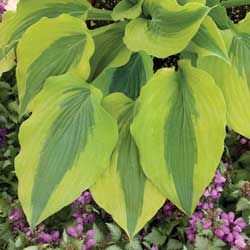
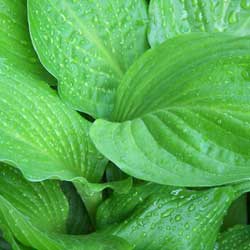
Hostas are praised by many for their magnificent variety of leaf sizes, colors and textures. These angels will grace your garden with heart-shaped, lance-shaped, oval or nearly round leaves, and leaf sizes vary as well. Smooth, quilted or puckered textures, with either a matte or glossy sheen, add to the glory and hostas’ radiant glow.

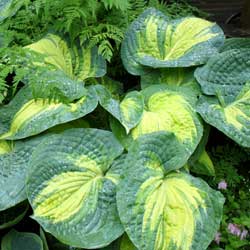
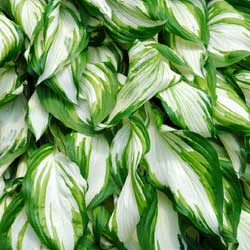
The leaf margins can be either smooth or wavy and range in color from light to dark green. Foliage colors also include chartreuse, gray and blue, depending on the cultivar. Variegated hostas with cream, white or yellow margins will radiate in a dark area of your garden.

Where to Plant Hostas

While most hostas are shade worshippers, some types will tolerate sun, depending on the overall climate and moisture levels. Hostas remain attractive from spring until frost and can withstand a wide range of growing conditions.

As choice groundcovers or single specimens in the landscape, hostas are certainly divine. Some hostas are quite unusual and rare and may increase in value each year, especially as the plants thrive and can be divided and transplanted with ease.

Best Hosta Care

Little maintenance is required to care for hostas. Cut off old flower stalks after flowers have faded. Divide plants occasionally to increase their quantity. Keep an eye out for pests, especially slugs and snails that munch on the foliage.

Types of Hostas

With so many selections and varieties, you can find a hosta the will fit into almost any garden situation. The most popular options include…

  • Dwarf & Small Hostas: In addition to being planted in secret little pockets throughout your garden or next to paths, dwarf and small hostas can be used in difficult places. Plant them among tree roots, on a slope or terrace or in rocky places containing little soil.
  • Edger Hostas: These hostas are 12” or less in height and have more horizontal growth. They are able to control weeds as they leave no light, when well established, or room for weeds to grow.
  • Groundcover Hostas: This group of hostas grows to 18” or less in height. They do a great job in areas difficult to weed or maintain. If you are in need of a hosta for use as a groundcover, keep in mind it works great to plant spring-flowering bulbs among them. The hosta comes up after the show of flowers and covers the fading foliage of the bulbs.
  • Background Hostas: Selections from this group grow to 24” or taller at maturity. They can be used to increase privacy where you sit and relax or to provide definition to your property line as a unique hedge.
  • Specimen Hostas: Specimens may be any size. Choose a site close to where the plant will be viewed so that every detail (texture, color pattern, buds, flowers and fragrance) may be enjoyed.

Not sure which hosta is right for you? Come in today and let our landscape and garden experts help you choose the right heavenly hosta to add a bit of the divine to your yard!

Hosta

Close water droplets on Hosta

Brother Stefan Hosta

Hosta Undulata

Growing Exotic Citrus

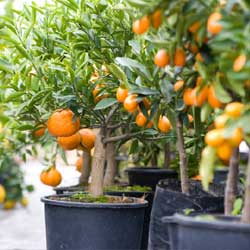
Citrus trees grown in fancy terra cotta pots, light-weight decorative containers or wooden planters can be used to adorn your garden, no matter how small it is. Use a potted citrus as a centerpiece for an herb garden, place several in a series on your steps or decorate your deck with these grand-looking accent plants. Dark, glossy green leaves look beautiful all season long while colorful, healthy fruit dangles enticingly from the branches. Although citrus plants are not winter hardy in the north, they may be moved indoors during this time. For added pleasure, citrus offers weeks of fragrant flowers in the spring.

Citrus Care

Place citrus plants in a sunny location where they will receive a minimum of 6 hours of sun to ensure the best possible fruit. Water regularly and feed with Espoma Citrus-tone as directed per package. During the summer months, citrus plants will produce a lot of new growth. In the early fall, before bringing plants indoors, prune citrus plants back about 1/8 of their existing size. This will help to minimize the shock that plants often experience when being moved. Use a humidity tray indoors or mist daily. Avoid placing your plant in a drafty area or by a heating vent. Provide a minimum of 6-8 hours of daily sun or very bright light in the winter months. It may be necessary to supplement with an artificial light source at this time of the year to keep the plant at its best.

It may seem unusual to have strange citrus trees in your yard or even right inside your home, but with a little care, you’ll be amazed at how much fun these plants can be to grow, and their sweet fruit is a wonderful reward for your efforts.

Potted Citrus Plants

Vegetable Garden Weed Control

You may want to grow many different things in your vegetable garden, but weeds probably aren’t on your favorite edibles list. Weeding can be an enormous time-drain and is one of the the least liked gardening chores. What’s wonderful is that we have so many weed control methods to choose from; there’s a solution for every type of gardener and their schedule.

Safe Control Methods in Edible Gardens

When it comes to vegetable gardening, many gardeners are very particular about what goes into their soil and onto their plants, as it will eventually end up on their plates and in their bodies. Here are some indisputable safe and effective ways to control weeds, without chemicals, in your veggie or any other garden for that matter.

  • Apply corn gluten meal to prevent weed seeds from germinating (don’t use if direct seeding your garden as all seeds will be affected).
  • Plan your garden to crowd edible plants together, effectively crowding out weeds because there isn’t space left for them to grow.
  • Manually pull weeds when the soil is wet and roots are looser. This can be done after a natural rainfall or after supplemental watering.
  • Hoe when the soil is dry to break apart weeds and damage their roots. Pick up larger weeds after hoeing so they cannot reestablish themselves.
  • Mulch with salt hay which contains no weed seeds. The hay will shield weed seeds from the sunlight and moisture they need for germinating.
  • Lay biodegradable and compostable mulch film down to create a firm barrier to keep weeds out or to prevent existing weed seeds from germinating.
  • Attract seed-loving birds such as finches and sparrows, which will happily eat hundreds of weed seeds each day for natural control.
  • Consider raised beds or container gardening to more effectively control weeds and make any remaining weeding easier.
  • Use fire (with all appropriate safety precautions) to burn out unwanted weeds, especially in pathway areas or along garden borders.
  • Treat exposed weeds with boiling water – the hotter the better – to cook and kill them. Several treatments may be needed for the best effects.

Weeds can be some of our worst enemies in the garden, and it is impossible to eliminate every single weed all the time. By using multiple methods and keeping on top of the task, however, it is possible to minimize weeds and make this chore less onerous, without resorting to harsh chemicals.

Veggie Weed Control

Green Gardening

Planting a vegetable or flower garden seems like the perfect thing to do when you are looking for ways to adopt a greener, more environmentally-friendly lifestyle. Some traditional gardening practices, however, may not be quite as “green” as you might think. Planning your gardens with the environment in mind and choosing some practices that maintain healthy ecosystems can help you create a truly “green” garden.

Tips for a Green Garden

There are easy, effective steps you can take in your garden to go green, including…

  • Plant local and native species of trees and shrubs which are naturally adapted to the conditions in your area, thus requiring less watering and having natural defenses for local insect pests and plant diseases.
  • Collect rainwater for watering your container gardens and new transplants, and adjust your irrigation schedule to compensate for whenever Mother Nature does the watering for you.
  • Use organic compost and mulch to improve soil health and reduce the need for pesticides and fertilizers. Better yet, make your own compost so you can adjust it to exactly what your plants need while keeping more waste out of landfills.
  • Opt for disease-resistant and pest-resistant plants rather than trying to force plants into an unfriendly area where they will need chemical assistance and extra maintenance to thrive.
  • Try to use natural products instead of chemical fertilizers and pesticides. Use traps, parasites and natural predators such as ladybugs and lacewings. Plants that repel insects – basil, chives, mint, marigolds or mums – mixed in with other plants can help keep pests away.
  • Choose wildlife-friendly plants such as flowerbeds that will attract hummingbirds, butterflies, bees and other pollinators, and don’t be upset to share some of your garden space with other critters.

These are just a few of the simple changes you can make in your gardening practices that will benefit the environment.

Green Products

More and more “green” products are readily available to help you maintain the natural health of your garden. Before using a product, however, be sure it is suitable for your situation, and follow all application and use instructions. Even organic or eco-friendly products can become toxic contaminants if they are improperly used.

Popular options for green gardening products include…

  • Dr. Earth contains probiotic beneficial soil microbes, plus ecto- and endo- mycorrhizae which feed the fiber of the living soil by releasing natural organic matter. People and pet safe.
  • Dr. Earth pest controls are organic controls for all of your pest problems, including all types of unwanted or troublesome insects. People and pet safe.
  • Espoma Organic Traditions line of products includes bone meal, kelp meal, garden sulphur, potash and garden lime for helping to improve your soil without artificial chemical compounds.
  • Bonide offers organic fertilizers as well as organic formulas for pest and plant disease control, such as fruit tree sprays.
  • Scotts Organic Choice lawn care products provide more environmentally friendly choices for your yard.

Developing “green” gardening practices benefits you and your family, your garden, your native plants and animals, your water supply – our world, all of us.

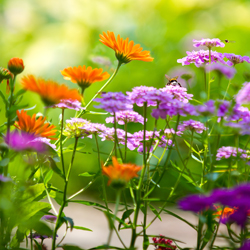
Flowers and bumblebee