
Author Archives: Dammann's Garden Center

Attracting Hummingbirds

It is an awesome sight to capture a glimpse of a ruby-throated hummingbird hovering over the flower garden on a sunny summer morning. One or two a year may be seen seeking food in the landscape, sampling everything in their path. Unfortunately, they leave as rapidly as they arrive. This season, attract more of these miniature avian anomalies and keep them returning year after year.

What Hummingbirds Want

You can charm hummingbirds to your yard with a selection of their favorite nectar-producing flowers. Hummingbirds are not attracted by scent but by color. Red happens to be their favorite, however, pink, purple, blue, orange and yellow will also catch their eye. Tubular flowers accommodate these birds’ long, narrow bills. Select a wide variety of plants that bloom at different times to keep hummers well fed all season long. Refrain from using insecticides when attracting hummingbirds, as they rely on insects for protein in their diets – especially during the summer nesting season when young hummers need extra protein for healthy growth.

Hanging a feeder is another way to encourage these visitors. Choose one with red parts to resemble the flowers that they prefer. Fill the feeder with a mixture of one part sugar to four parts hot water to help the sugar dissolve. Fill the feeders after the mixture has cooled. Easier yet, fill with instant nectar purchased at our store. Clean feeders every 2-3 days early and late in the season, and daily in hot weather.

Plants That Attract Hummingbirds

The easiest way to keep hummingbirds fed without the hassle of refilling and cleaning feeders is to provide a lush landscape filled with their favorite flowers. Fortunately, that’s easy to do because these birds will sample nectar from a wide variety of blooms. No matter what your yard size, soil type, sun exposure or moisture levels, there are plants you can add to the landscape to entice hungry hummers to stop for a snack.

Annuals

  • Four-O-Clocks
  • Fuchsia
  • Geraniums
  • Impatiens
  •  Sage
  • Nasturtium
  • Petunia
  • Pineapple Sage
  • Red Salvia
  • Zinnia

Bulbs

  • Canna
  • Gladiolus

Perennials & Biennials

  • Bugleweed
  • Bee Balm
  • Beard Tongue
  • Cardinal Flower
  • Columbine
  • Coral Bells
  • Daylily
  • Delphinium
  • Gaura
  • Hollyhocks
  • Hosta
  • Phlox
  • Spiked Gayfeather
  • Lily
  • Rose Mallow
  • Russell Hybrid Lupine

Vines

  • Candy Corn
  • Morning Glory

Shrubs

  • Butterfly Bush
  • Glossy Abelia
  • Lilac
  • Weigela

Fun Hummingbird Facts

Why not learn a little more about these fascinating birds? The more you know about their amazing abilities and unique characteristics, the more you’ll appreciate having them visit your yard!

  •  Hummingbirds are the smallest birds in the world.
  • There are over 340 species of hummingbirds and they are found only in the western hemisphere. Most species are found in the tropics.
  • Hummers can hover as well as fly straight up and down, sideways, backwards and even upside down.
  • Hummingbirds beat their wings about 75 times per second.
  • They can drink eight times their body weight and consume about 500 insects daily.
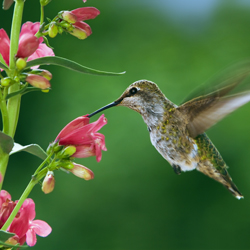
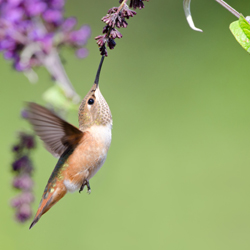
Hummingbird and flowers
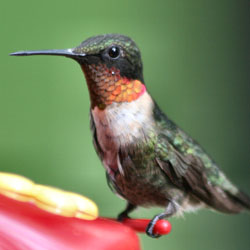
Hummingbird
Hummingbird perched on Hummingbird Feeder

Raising Root Crops

Root crops are among the easiest vegetables to grow, and often the first and last vegetables in the garden to mature. Your garden may produce enough vegetables to take you through the entire year and, if kept correctly, root crops will last a long time in storage. These vegetables are great to grow, even in a small space. Many root crops are frost tolerant and with most, the tops, or greens, are also edible.

What Root Crops Need

To get the best harvest of root crops, no matter which types you opt to add to your garden, you need to meet their cultivation needs.

  • Soil
    Root crops grow best in deep, loose, rock-free soil that will allow the roots to form and grow easily. To nourish the plants, supplement the soil with plenty of organic matter.
  • Fertilization
    Root crops require a high phosphorus fertilizer for optimum growth, but check the needs of individual crop types to choose the best mixture. Always apply fertilizer according to the proper directions to prevent burning.
  • Temperature
    Most root crops are considered cool season vegetables and are planted both early and late in the growing season. Warm days and cool nights are most beneficial for root expansion.
  • Light
    Full sun is best.
  • Planting
    Seeds should be sown 2-3 weeks before the last expected frost date and subsequent plantings made every three weeks thereafter as weather permits (some exceptions apply). Planting depth varies depending on the type of plant; follow the directions on the seed packet. After seedlings emerge, thin to desired spacing as determined by the diameter of the root at harvest time. Beet and turnip tops that are thinned are edible raw as salad greens or they may be cooked. Root crops are generally not transplantable because they have a tap root.
  • Mulch
    Mulch plants that have already been thinned with salt marsh hay to retain soil moisture and minimize weed growth.
  • Pest Control
    Maintaining appropriate cultivation requirements will reduce or eliminate the need for pest control. As with all vegetables, it is important to rotate crops each year. Rotating root crops will discourage root weevils.
  • Basic Storage
    All root crops may be stored for a time before being eaten. In general, store at 32 degrees Fahrenheit and 95 percent humidity. Leave the crops in the garden as long as weather permits, then dig. Store the harvest in a root cellar or refrigerator.

Tips for Favorite Root Vegetables

  • Carrots – Plant in sandy soil if you want the classic, long, narrow type.
  • Beets – You may harvest 1/3 of the tops without affecting the root.
  • Garlic – Best planted in the fall.
  • Horseradish – Use caution when planting this aggressive perennial.
  • Kohlrabi – Has a mild, sweet cabbage flavor.
  • Leeks – Flavor is best if harvested after a light frost.
  • Onions & Shallots – Plant from seed or sets.
  • Potatoes – Best planted from ‘seed potatoes’ to match variety.
  • Radishes – Mature in as little as three weeks.
  • Sweet Potatoes – Warm weather root crop, will not withstand a frost.
  • Turnips – For a fall crop, sow seeds in midsummer.
Radishes and carrots

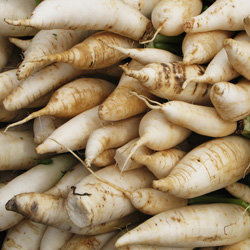
Daikon Radishes

Potatoes

Summer Sizzles With Crocosmia

There is an excellent assortment of bulbs available for planting this time of year that promise a bounty of summer blooms. The thing is, many of these bulbs are not winter hardy. This can create a predicament for gardeners anxious for easy summer flowers but short on time and space to dig and store tender bulbs. Crocosmia can be the answer.

Introducing Crocosmia

Native to South Africa, Crocosmia – also known as montbretia, coppertips or falling stars – sizzles all summer long in colors of yellow, orange and red. The numerous small florets are tubular in shape and borne along a long, gracefully arching stem rising above sword-like foliage. Together, this formidable combination creates exotic elegance sure to be a showstopper in the garden or landscape. Hummingbirds and butterflies also find it irresistible when in bloom, and the fall seedpods are delectable for many seed-loving finches and sparrows.

Planting Crocosmia

Plant Crocosmia corms now, while they are available. Plant them in well-drained soil in full sun, 2-3 inches deep and 8-10 inches apart. A south-facing location is best, or in colder regions, add Crocosmia next to a wall that will help warm the soil. The pointy side of the bulb should be facing up. Place a handful of bone meal in the planting hole and water the soil well when done planting. These are drought-tolerant flowers, but supplemental water will still be welcome in extremely dry conditions.

Crocosmia look best when planted en masse. A grouping on either side of a sunny entrance way can be stunning, and they look equally fetching when tucked into the perennial border. This plant performs well in containers and makes an excellent cut flower – in fact, cutting the flowers will encourage even more beautiful blooms to form.

Blooms will first appear in May or June and will continue blooming throughout the summer. Flower spikes can stretch 2-3 feet tall, adding a bold burst of color to the landscape. Even without the flowers, the blade-like foliage is attractive, and some cultivars show pleats or rippling for more textural interest.

After flowers have finished blooming, simply snip off the faded flower stalks. Leave the foliage to fade naturally as you would with any other bulb. These leaves continue to produce food to provide nourishment for next year’s flowers. Leaves may be cut back to the ground once they are completely yellow, and a thick layer of mulch should be added for winter protection. Once established, these bulbs are winter-hardy and will return year after year to heat up the spring and summer with their gorgeous colors and forms.

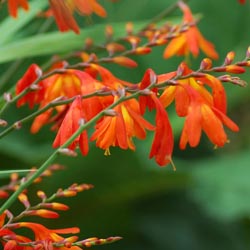
Crocosmia

Worrisome Weeds

Gardeners spend hours carefully cultivating their favorite plants, whether they are delicious veggies, flavorful herbs, sweet fruits, stunning flowers or luxurious grasses. It hardly seems fair that unwanted weeds barge in and take advantage of all that work, and seem to sprout up without any effort. Fortunately, there are many ways to control weeds without losing your mind or your garden to their influence.

Stopped Before They Start

The easiest way to stop weeds from invading your lawn and garden is preventing them in the first place. Proper practices can discourage weeds from growing. Helpful tips to achieve a beautiful, weed-free lawn and garden include…

  • Buy only high quality, certified grass seed and select a variety that is best suited for the amount of sunlight and traffic expected in the area, as well as its ability to withstand drought, insects and disease. The healthier the lawn is, the less room there will be for invading weeds to use.
  • Avoid light, frequent watering or overwatering. Plants that receive deep, infrequent watering generate extensive root systems. Strong roots foster thick, hearty plants and lawns that withstand stress, preventing invasions from pests, weeds and disease.
  • Fertilize your lawn and garden on a regular basis. Be sure to first test your soil to determine its pH and add any soil amendments necessary to ensure ideal growing conditions. This will help keep your turf, garden and plants healthy so they crowd out any unwelcome weeds.
  • Always cut lawns at the proper mowing height. Never cut off more than 1/3 of the grass blade at one time. Keep mower blades sharp to avoid tearing plant leaves. Scalping or mowing too closely will stress your lawn, while weeds thrive under these conditions. A dense, healthy, vigorous lawn will resist the intrusion of weeds.
  • Properly cultivate lawns and gardens. By routinely tilling flower beds and aerating lawns, you reduce compaction and thatch. This allows air, water and nutrients to flow freely through the soil, making them more available to plants. Healthier plants will grow more vigorously, taking room and nutrients away from weeds.
  • Densely plant and generously mulch flowers, trees and ornamentals. By eliminating space and sunlight, weeds won’t have the needed room or nutrients to gain a foothold in beds and gardens. Always be careful mulch does not come in contact with plant stems and trunks as this can create areas of excessive moisture where fungus and disease problems can arise.
  • Plant ground cover or landscape hard to grow areas. If weeds are a persistent problem and you have difficulty growing grass in certain areas of your yard, consider alternative plants or decorative material such as landscape rock or other hardscaping.
  • Stop weeds before they can seed or develop extensive root structures. Remove existing weeds by pulling or hoeing them or use an all-purpose weed killer of your choice. Then apply Preen, corn gluten or similar pre-emergent controls to prevent new weeds from germinating.

Weeds may be a problem in any landscape, lawn or garden, but the more steps you take to eliminate them, the more successful your efforts will be and the fewer weeds you’ll see.

Protect Your Japanese Maples

Beautiful additions to any landscape, Japanese Maples will look their best when given some protection during hot, dry summers. As the weather becomes hotter and drier, your these trees may show signs of heat stress with the development of crispy leaf edges or, as conditions get even more extreme, leaf drop. This diminishes their stunning beauty and shrivels their leaves, but fortunately, there are several ways you can minimize this problem no matter what the weather. From planting these trees in the right spot to mulching the roots appropriately to using anti-transpirants, you can shield Japanese Maples from drought-like conditions.

Protective Planting

When planting a Japanese Maple, choose a location that receives morning sun only and has some protection from strong winds. Full afternoon sun and windy conditions will quickly stress plants and reduce leaf color. Planting a Japanese Maple in front of a western or southwestern windbreak of conifers or other evergreens will provide good shielding, or plant these trees on the eastern side of the house, garage or other structure to provide that essential barrier.

Save Moisture With Mulch

Mulching will help to retain moisture and cool root zones to protect these trees. Apply 2-4 inches of mulch under your Japanese Maples, extending out to the drip line for complete protection. Be sure to keep the mulch several inches away from the tree’s trunk to avoid fungus problems and crown rot. Ideally, install a drip watering system or other slow-release watering under the mulch to retain the most moisture with less water lost to evaporation.

Anti-Transpirant Sprays

Another way to keep your Japanese Maples looking their best is to use an anti-transpirant to helps minimize moisture loss from leaves. The best time to apply an anti-transpirant is in early summer when Japanese Maples are in peak condition, before they start showing signs of suffering from heat stress. Make your applications early in the day or on a cooler, overcast day to avoid leaf burn. Apply monthly through the hottest part of the year and your beautiful trees will look gorgeous heading into the fall season.

Japanese Maples are popular landscaping trees and make stunning specimen plants in any yard, but they can be subject to heat stress that will reduce their beauty and vitality. By taking several steps to protect them, however, you can enjoy the beauty of these trees even when summers are hot and dry, and properly protected, your Japanese Maple will look brilliant throughout the summer.

Japanese Maple

Edging and Trimming

Edging and trimming the lawn is like having a manicure after cutting your fingernails. It smooths out any roughness and adds an elegant finishing touch to your landscape, and everything is just more perfect! But which lawn care activity is which, and how do you do them properly to give your lawn that manicured look?

Edging or Trimming – Which is Which?

Before you pull out the lawn tools, it’s important to know which activity you need to do to create the look you want.

  • Edging
    When you are edging, you define the line between a hard surface (sidewalks, driveways and curbing) and a growing area such as a flower bed, garden or lawn. To achieve this, a vertical cut is made between the two using a spade or edging tool. Some have mastered the art of using the string trimmer to do this. This creates a crease-like separation between the organic (growing) and inorganic (non-growing) surfaces. Properly done, edging will help minimize weed growth in these cracks and crevices and gives the landscaping a smooth, formal appearance.
  • Trimming
    Trimming removes the grass, weeds and other plants from areas a lawnmower can’t reach. Long wisps of grass along the side of the house, fence or other structure aren’t very attractive, and trimming them away will give a finished, uniform look to the landscaping. Most people use a string-trimmer or bladed trimmer for this work, but hand shears also do the job. Trimming is also often done around trees or in tight corners where a lawnmower is less effective.

When to Do Edging and Trimming

How often should trimming and edging be done? This depends upon your own personality. Some people feel edging and trimming is a requirement of every mowing. Others do edging and trimming every third or fourth time they mow, or whenever it may look necessary to give the lawn and landscape a uniform look.

Edging and Trimming Tips

No matter how often you choose to do edging and trimming, it is important to do it effectively!

  • Use only the proper tools for these landscaping tasks. This will help prevent injuries or strain on your hands, wrists and elbows, and will get the job done more quickly and efficiently.
  • Check edgers and trimmers regularly to be sure they are sharp, well-oiled and in good functioning condition. Keep extra string for a trimmer on hand so you can quickly replace the spool when it runs out.
  • Always practice good safety measures when edging and trimming. Wear safety goggles if there is risk of flying debris (as there often is), and keep the tools away from children and pets.

For many people, edging and trimming is all part of good lawn maintenance. Once you know the differences between them and how to do them well, you’ll be amazed at the difference these tasks make to the beauty of your lawn.

Wild About Window Boxes

Window boxes can be an amazing addition to your home landscape, and they’re much more flexible and versatile than many gardeners realize. Take advantage of this great space and you’ll soon be wild about window boxes!

Choosing a Window Box

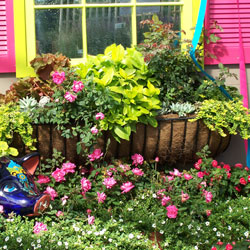
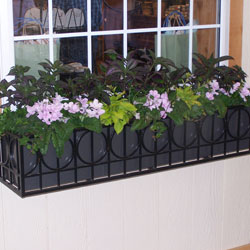
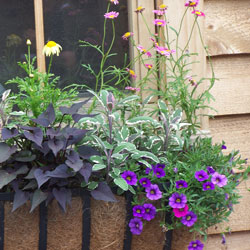
There are many types of window boxes available, from classic rectangles to wire frames with coir or sphagnum moss inserts. Wood and plastic boxes are also available, and they can be half-circles, have rounded ends on a longer box or may even be smaller boxes with pointed bottoms, a cone shape, suitable for just one or two favorite plants. While most window boxes are designed to be mounted beneath a window, they can also be positioned on a fence, deck railing or even a sunny patch of wall to add more beauty and growing space.

When choosing the best window box for your home, coordinate with the architecture of your house for a smooth, elegant look. Ideally, the box should be the same length as the window or just slightly shorter, but not so short that it looks out of place or unbalanced.

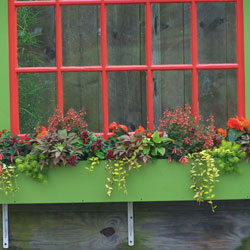
Window boxes come in a variety of popular or neutral colors, and some boxes can be painted to match your house’s window trim or siding exactly. When mounting the box, be sure it is securely supported so it will not tip or fall. Larger, heavier boxes may need additional brackets underneath to support the weight of a full box, taking into account not just the weight of the box itself, but also of the soil, water and mature plants.

Plants for Window Boxes

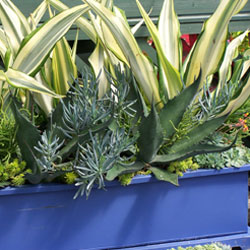
Any plants that are comfortable in small or medium-sized containers can thrive in window boxes. You may want to opt for flowers for a colorful accent to your home, or choose herbs, berries or even lettuce for a kitchen window box that will be easy to harvest. Small ornamental grasses and spreading ferns or spider plants are ideal choices for a green window box.

No matter what plants you choose, be sure they are suitable for the climate of the window box. Consider the amount of sun the box receives and when it may be shadowed throughout the day. Also note that window boxes against walls or fences, as opposed to boxes on railings, will receive more heat if the wall is dark in color. If the wall is white, it will reflect more light onto the plants.  Take not of overhanging roofs that will prevent rain from reaching your window box. Supplemental water will be a necessity in this case.

You can use just one type of plant in a window box for a bold statement, or you may prefer a mixed container that combines textures, shapes and color for a more dramatic look. Consider mounding plants that will easily be seen above the edge of the box, or trailing varieties that will gracefully drape over the box and soften any harsh edges. Symmetry and balance can be important in window boxes, so be sure to envision how the plants will look when mature so the entire arrangement will complement your home and other nearby landscaping.

Best Window Box Care

Just like any container, window boxes require unique care to allow plants to reach their full potential. Fortunately, if you mount a window box outside a window that can be opened, it’s easy to open the window for watering, weeding and pruning as needed. Use a rich potting soil that will provide abundant nutrition for the plants, and fertilize as needed for the type of plants you’re growing. A nitrogen-rich fertilizer is best for leafy plants and dramatic foliage, while a fertilizer that is heavier in potassium will encourage brighter blooms and more flowering.

Because window boxes are containers, they will need more frequent watering, even daily or twice a day depending on the climate and how thirsty the plants may be. To make watering less of a chore, consider using automatic waterers such as watering bulb that will keep your window box properly hydrated. When you water by hand, a small watering can with a thin spout is best, as you’ll be able to get water directly to the soil without wasting precious water on plant foliage where it will do no good and has the potential to burn delicate foliage in a sunny situation.

When tending window boxes, use small, hand-sized tools that won’t disrupt other plants in the crowded space. Thinning or pruning the plants regularly will help encourage new growth to keep the plants lush and the box full. If you’ve planted an edible window box with herbs or veggies, harvesting when the plants are ready will provide richer flavors and spur new growth to lengthen the growing season and increase the plants’ yield.

Decorating a Window Box

While the plants in your box may be decoration enough, a window box can also be a great space to add extra decorative flair to your home. The box itself can be wrapped with a ribbon to add more color or coordinate with the current holiday. Decorative plant stakes or small garden flags provide bright accents that can be switched out with different seasons and holidays. You might even create a small fairy garden in a window box, with a quirky gnome or other whimsical figure peeking out from the fun foliage. In winter, pine boughs can be layered in the box for ongoing greenery along with colored or natural branches, and a small strand of lights can even be strung along the box for a glittering twinkle. If you prefer to light your box up year-round, you might even carefully place a solar plant stake or two in the box to highlight the arrangement.

Window boxes are far more than just small planting containers – they can be beautiful accents to your home, an extension to your growing space and even a spot for fun whimsy in your yard. You can make them into whatever you like – don’t be afraid to go wild!


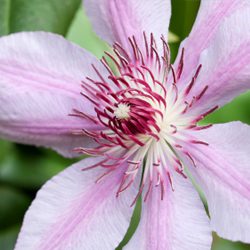
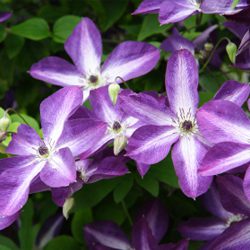
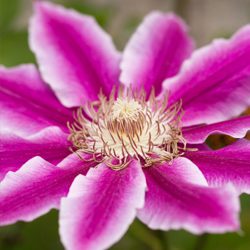
Clematis

Beautiful, showy clematis are not as difficult to grow as you might think. Learning when to prune your clematis and giving a little attention to their few requirements will reward you with a magnificent show of colorful blooms.

Planting Clematis

A beautiful clematis starts with proper planting. Clematis prefer to have their roots in the shade and their tops in the sun. Keep the roots cool with a well-drained rich soil with added compost, peat moss or composted manure and a good layer of mulch. Planting ground cover or other low growing perennials around the base of your clematis will also help to keep the soil cool and minimize weed growth. Organic amendments will help to retain moisture when added to the soil. Feed monthly with a liquid fertilizer or use a slow release fertilizer which can last for up to six months.

A Note About Bloom Rates

For the first few years, clematis may be slow to grow. Just keep in mind that it is establishing its root system, which is essential to a healthy, vibrant plant. In its first year, your clematis may produce very few flowers or even none at all. By the second year there will be more growth and a few flowers. By the third year you should see substantial growth and many lovely blooms.

Planting Clematis

For the best chance of success if you are new to gardening with clematis, buy plants in larger containers. While smaller starts will be less expensive to buy, they will take a little more work to establish and can be more delicate and prone to failure. If you purchase a pot of any size and are not planting it in the ground immediately, be sure not to allow the soil in the container to dry out or the plant may be overly stressed and vulnerable.

Keep the climbing habit of clematis in mind when selecting your planting site. Allow your plants to grow up into large shrubs and trees, or on a trellis against a sunny wall. Select varieties with growth that will not exceed your shrub or trellis; a 20-foot vine may overwhelm a smaller shrub or a weak trellis and will look overgrown and out of place.

Proper Pruning

Clematis are divided into three distinctive groups. Knowing what group your clematis falls under will guide you on when and how to prune.

These pruning suggestions are for established vines that have been in the ground for at least three years. Young vines should all be pruned to 12 inches the second spring and to 18 inches the third spring. This helps to develop more shoots, a fuller vine and a better root system.

  • Group 1
    This group includes certain species clematis and their cultivars which bloom early in the year. Some of the more familiar representatives of this group include the Montanas, varieties of C. alpina and C. macropetala. All of the Group 1 clematis bloom on growth made the previous year. They can be pruned to keep them within their allotted space or to remove dead and unsightly foliage. If they are pruned late in the season or before they flower, however, the cuts may remove potential flower buds and reduce that year’s flowering. To prevent this, prune Group 1 clematis right after flowering.
  • Group 2
    These are the large flowered hybrids. They are often divided again into two subgroups – 2a and 2b. All of the clematis in Group 2 bloom on ‘old wood’ (actually on short shoots from old wood) and should not be pruned except for deadwood pruning in early spring after the leaf buds open slightly.
  • Group 3
    These are the summer-blooming varieties such as the viticellas and Jackmanii types that bloom on new wood and the late bloomers such as Sweet Autumn Clematis (C. terniflora) and orientalis types. Clematis in Group 3 mainly flower on new wood produced in the current year and should be pruned back severely every year in late winter, when they are completely dormant, to about 12-14 inches. Leave at least two pairs of buds on each stem of the plant. Most clematis in this group are very fast growing and will reach their full height before blooming every summer.

Once you know how to properly care for clematis, you will find it to be a welcome addition to your landscape. If you aren’t sure just what your clematis needs to thrive, our expert staff will be glad to help be sure you and your plants have a great relationship!


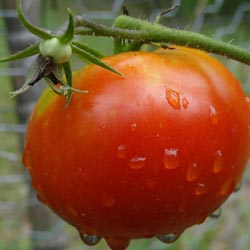
Watering Tomato Plants

Proper watering plays a significant role in producing a healthy tomato plant with tasty, meaty, juicy fruit. So, what’s the secret, and how can you be sure you are watering your tomatoes the right way?

Watering Location

Always water tomatoes at the root zone; never overhead water your tomato plant. Watering directly at the soil level will strengthen the plant’s root system and ensure the maximum amount of moisture reaches the roots. When you overhead water, much of the water will not make it to the roots as it evaporates before reaching the soil. Water droplets on plant leaves act as a magnifying glass and can burn tender plant tissue, damaging foliage that is essential to keep the plant healthy. Water dripping from leaf to leaf can also spread disease, infecting an entire crop. To be sure tomatoes are not being watered inappropriately, keep plants out of reach of lawn sprinkler systems or other inadvertent watering.

Watering Speed

Slow watering is essential to properly distribute moisture to a tomato plant. Allow the water to drip slowly into the soil, giving the plant roots time to absorb the moisture. A drip system is best and will also help with water conservation. Avoid using a hand held hose, as it is easy to either underwater or overwater using this method. Water to a depth of 8 inches to ensure all roots have access to adequate moisture. You can also use a watering reservoir, such as a gallon jug with several small holes in its bottom, to slowly and carefully water the plants without flooding the root zone.

Watering Frequency

A regular watering schedule is essential for the healthiest, most productive tomato plants. Water consistently to produce larger fruits and to avoid split and cracked fruit and blossom end rot. Tomato plants should be watered 2-3 times a week in the height of summer or when natural rain is lacking. A deep soaking rain counts and supplemental watering should be adjusted whenever Mother Nature lends a hand with watering chores. The top inch or two of soil should dry out between watering to be sure the plant is not getting too much moisture.

Watering Adjustments

There are several times when it may be necessary to adjust where, when and how much you water your tomatoes. Changes in local rainfall – increasing spring or summer rains, a sudden storm, an unexpected drought – can require changes in supplemental watering to keep the moisture to your tomatoes consistent. As plants grow and more fruit appears, more water may be needed to meet the plant’s watering needs and keep it lush and healthy.

By understanding the basics of watering tomatoes, you can keep your plants well hydrated without risk of either overwatering or underwatering, both of which could be disastrous for your tomato crop.

Let Me Out! Moving Houseplants Outside for the Season

Are your house plants looking a little peaked after a long winter of being cooped-up inside? Getting out for some fresh air during the warm months is healthy for all living things, including your potted plants. It is important to move plants safely and thoughtfully, however, or else you risk shock and damage that can destroy your carefully cultivated houseplants. With the right steps, you can move your houseplants to outdoor accommodations for the spring and summer while still protecting them from unfavorable conditions, pests and wildlife.

Tips for Moving Houseplants Outdoors

When you are ready to move your houseplants outside…

  • Wait until there is no longer any danger of freezing or frost before setting houseplants outside.
  • Before you place plants outdoors, acclimate them to the spring temperatures. Set them outside for short periods of time and bring them inside at night.
  • Over a period of two weeks, lengthen the plants’ outdoor exposure time gradually. Continue to bring plants inside at night if temperatures are not consistently above 55 degrees Fahrenheit.
  • Do not place plants directly in the sun or else the leaves may burn.
  • Set plants on pot feet or a suitable plant stand to prevent sow bugs.
  • Arrange plants in groups for increased humidity, being careful to promote good air circulation within the foliage.
  • Check soil often for moisture levels, as warmer days and breezes may dry pots out more quickly.
  • Empty saucers of excess water to prevent root rot and minimize standing water that will attract biting insects.
  • While away on vacation, use a self-regulating plant watering system.
  • Mulch the surface of the soil to retain moisture and keep weed seeds from invading the soil.
  • Keep squirrels from digging in pots by placing a layer of crushed oyster shells or chicken wire on top of the soil.
  • Use a slow-release fertilizer to save you time and energy on frequent fertilizing. Or, use a water soluble fertilizer every other week. Follow the manufacturer’s instructions so as not to burn tender plant roots.
  • Groom plants by clipping off damaged stems, yellow leaves and spent flowers. This will also improve air circulation and sunlight reach.
  • Trellis or stake plants that get too tall to prevent them from flopping over.

As they enjoy their time outdoors, you’ll see healthier, more robust houseplants with plentiful new growth and vigor. Why not give all your plants a great spring and summer getaway by moving them outdoors?