

 Azalea "Stewartsonian"
Brilliant flame red flowers. A bushy, upright plant with maroon fall coloring. Can be larger than others. 6 ft x 6 ft with time. Late bloomer. Likes filtered or part sun.
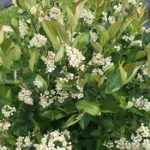 Aronia 'Low-Scape Hedger' PW
This is a super versatile native flowering shrub that's perfect for low hedges or screening. Spring finds the plant covered in hundreds of white flowers, and come fall, the foliage lights up in bright reds and oranges. Low Scape Hedger grows well just about anywhere: in full sun or part shade, wet or dry soils, in hot climates or cold ones. Non-suckering; Can be pruned into a formal hedge or left to grow naturally. Grows 3-5' tall.
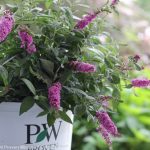 Buddleia Lo & Behold® 'Pink Micro Chip' PW
A whole new color for the Lo & Behold series, 'Pink Micro Chip' is a small plant with an abundance of unique, tiny blooms giving this butterfly bush the look of a Salvia but with the sweetness of a Buddliea. Like others in the series, it bloom continuously, attracting butterflies all season. Grows 18-24" tall.
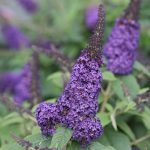 Buddleia 'Pugster Blue' PW
The Pugster® series of butterfly bush are characterized by their short, stocky frame coupled with their large, full sized flowers. The thick, heavy stems ensures better hardiness compared to most small buddleia. Pugster Blue butterfly bush offers true blue flowers - this color will fly off the bench at the garden center. Grows 24" tall.
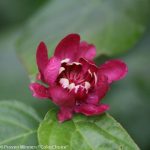 Calycanthus x 'Aphrodite' PW
It's very fragrant! A new, improved calycanthus with large, bright red magnolia-like flowers. This rebloomer has nice, glossy foliage, too. Grows 5-6' tall.
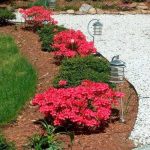 Azalea “Girard Crimson”
Great for small urban gardens. Blooms emerge In late April into May. Crimson blooms have a dark throat and are attractive to early pollinators. Single blooms are accented by dark foliage on this compact varieties. average 3′ by 4′ garden size.
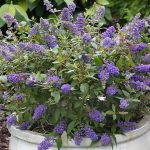 Butterfly Bush “Low & Behold® Blue Chip” PW
This miniature butterfly bush has all the appeal in a smaller package! Flowers from mid summer to frost. Pruning generally not needed, but may be trimmed in spring. Fragrant flowers. Deer resistant. Attracts butterflies and hummingbirds. 2-3 ft tall and wide.
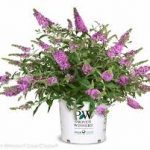 Butterfly Bush “Lo & Behold® Lilac Chip” PW
You wont have to sacrifice bloom size for a dwarf habit with this butterfly bush. Soft lavender-pink flowers are fragrant and attract butterflies. Reblooms until frost. Dwarf. Deer-resistant. 1 1/2 to 2 ft tall and wide.
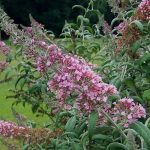 Butterfly Bush “Pink Delight”
Spectacular summer color from conical clusters of bright pink flowers. Terrific fragrance attracts butterflies. Good background or accent plant with a compact habit of growth. Deciduous. 6-8 ft tall and wide.
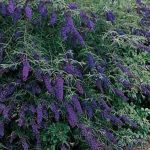
Butterfly Bush “Black Knight”
Spectacular summer color from dark, violet-purple flower spikes. Attracts butterflies. Good background or accent plant. Deciduous. Slightly hardier than others, but may die to ground in cold winter areas, emerging vigorously in spring. 6-8 ft tall and wide.
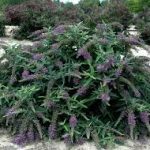
Butterfly Bush “Lo & Behold® Purple Haze” PW
Horizontal, low spreading habit and feathery, deep green leaves make it an excellent ground cover plant. Dark purple spires of blooms radiate outward and downward. Adds Beauty and attracts butterflies to any sunny landscape.
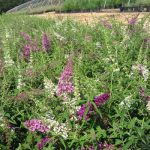
Butterfly Bush “Fourth of July”
A lovely combination of pink, purple and white spires erupt from this shrub, making mixed borders and cottage style gardens gleam with color variety. This diva gives you a grand finale bloom all summer long. Grows 5′-10′ and 4′-8′ wide.
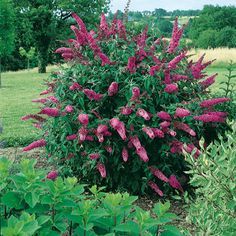
Butterfly Bush “Miss Molly”
Good-Golly Miss Molly! Richly vibrant red-pink blooms adorn silvery leaves on this cutie. Dead-heading will reward with re-blooming on this Buddleia. Its compact branching makes it great for mixed borders or pollinator gardens. Enjoy blooms from midsummer till frost.
Buckthorn “Fine Line®” PW
Lacy fern-like foliage combined with a narrow columnar habit make this a fantastic plant for adding texture and shape to the garden. Foliage turns yellow in fall. Great as a narrow hedge, accent specimen, and to frame doors and pathways. Sun or shade. Reaches 5 to 7 feet tall and 2 to 3 feet wide.
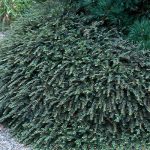
Cotoneaster “Tom Thumb”
Miniature hedge formed by spreading branches display an interesting herringbone pattern on this little shrub. Tiny pink flowers in spring lead to large, beautiful red berries to brighten the winter landscape. Semi evergreen to deciduous. Full sun to part sun. Moderate growing 1 to 2 ft. tall, 5 ft wide.
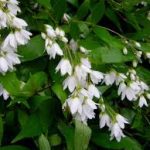
Dwarf Slender Deutzia
Easily grown in part sun to light shade. Prefers moist, humus soils, with best flowering in 6 hours of sun. A dwarf, dense, rounded shrub which forms a graceful, spreading mound. Tiny white flowers cover the shrub in early spring. Medium green leaves turn an attractive deep burgundy in fall. More compact form than the species. 1-2 ft tall and 2-5 ft wide
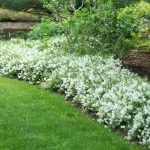
Deutzia “Yuki Snowflake™”
This floriferous white blooming variety is great for spring gardens. Compact size and added fall color make it great for border and mass plantings. This little guy averages 1′-2′ high and 1′-3′ wide and is deer resistant.
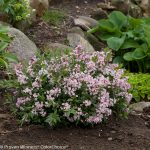
Deutzia “Yuki Cherry Blossom™”
A shower of elegant pink flowers create a carpet of color on this low spreading plant. Tidy, well mounded habit and attractive fall foliage color. At maturity reaches 1′-2′ both high and wide. A Zone 5 variety.
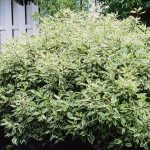
Dogwood Red Twig “Ivory Halo®“
The same light green and white foliage and brilliant red winter stems of the regular form, but only two-thirds the size. Plant in shrub borders,in mass or as a low hedge. Deciduous. Can handle a lot of water. Partial to full sun. Moderate growing, compact and rounded 5 to 6 ft. tall and wide.
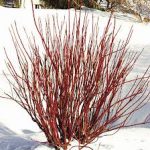
Dogwood - Red Twig
Red Twig Dogwoods have dark red stems that provide a spectacular show in the winter sunlight. White summer blooms add spring through fall interest. Reaches 8 to 10 feet tall. Full to part sun. Can handle a lot of water.
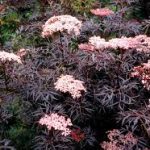
Elderberry “Black Lace™” PW
Intense purple black foliage is finely cut, giving it an effect similar to that of Japanese maple. Creamy pink flowers in spring contrast nicely with the dark leaves. They are followed by blackish red fall berries which can be harvested for making elderberry wine and jam, or left on the plant to attract birds and other wildlife. Part sun to sun. 6-8 ft tall and wide.
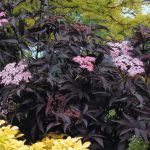
Elderberry “Black Beauty™”
A thicker leaved variety with massive, pink flowers in mid-summer which contrast wonderfully with the dark purple, almost black foliage. Grow it as a shrub, or cut it back each year and use it as a bold perennial. Produces blackish red berries in the fall which attract birds and wildlife. Can grow to 10 ft tall and wide.
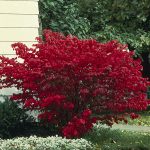
Euonymous (Burning Bush) “Little Moses®“
Improved selection of dwarf burning bush with outstanding fall color. Its better branching and superior stem hardiness make it an excellent choice down to zone 4. Mature Garden size 2′ to 3′ tall and wide.
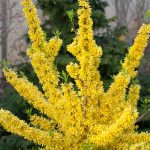
Forsythia “Show Off®”
This little beauty will be a blast of early spring color from the ground up! It is compact and full of blooms from the ground to the end of every stem. Older varieties can become out of control and often become victims of bad pruning; this little beauty will stay small so there is no need to prune. Now you can have a nice tight, compact forsythia hedge without doing any work! A real improvement over older varieties, Show Off is a very showy choice for the early spring garden. Fast growing to 6ft by 6ft.
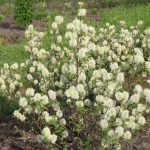
Fothergilla “Mount Airy”
Deciduous shrub with deep blue-green leaves has attractive fall color. Honey-scented, brush-like flowers appear before the leaves. Beautiful addition to shrub borders or for background in semi-shaded borders. 4-5 ft
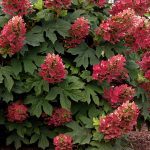
Hydrangea Dwarf Oakleaf “Ruby Slippers”
A profusion of exceptionally large flower clusters in summer are showcased against dark green, deeply lobed oak like leaves. Blossoms open white, quickly age to deep pink and are robust, remaining upright even after heavy rains. Foliage turns a brilliant mahogany in fall. Compact form is well suited for small landscapes. Ideal used in mass plantings, hedges and mixed borders. An introduction from the U.S. National Arboretum. 3-4 ft tall and wide.
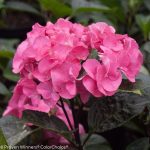 Hydrangea “Abracadabra® Orb” PW
This baby will cast a spell on you. Mop like flowers change from green and peach into a show of Dazzling hot pink. What makes this one a show stopper is its unusually black stems. Soil pH can affect bloom color. Is salt tolerant making it great for edging walkways. Blooms on old wood. 4′ average height.
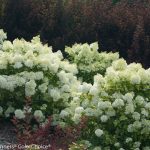
Hydrangea “Bobo”
A new dwarf hydrangea that is sure to turn heads! It will be engulfed by enormous creamy white flowers in summer, providing a nonstop show until frost. Blossoms are held upright on strong stems, and continue to grow and lengthen as they bloom. In fall, flowers may turn a pinkish hue. An undeniable asset to any garden, particularly where space is limited. 3-4 ft tall and wide.
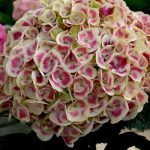
Hydrangea “Cityline® Mars” PW
This hydrangea is out of this world with its two-toned blooms! Flowers range from magenta to blue with white accents on this compact plant. Blooms are long lasting and plant is mildew resistant. Mounded form can range from 1′ to 3′ and is suitable for both containers and landscaping. Fall transplanting may be necessary if in containers. Zones 5-9.
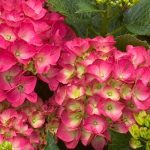
Hydrangea “Cityline® Paris” PW
These compact beauties will have you saying Bonjour! Bright pink-fushia blooms fade to green with age. Great for pots or protected landscapes. 1′-3′ make it suitable for small plantings. zones 5-9.
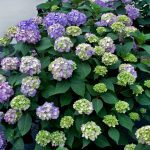
Hydrangea “Endless Summer BloomStruck®”
The newest addition to the Endless Summer® Collection of reblooming hydrangeas! Boasts big, beautiful blooms all summer long, measuring 3.5 – 5″ across. Depending on soil pH, you can have rose-pink, violet or blue flower heads. This beauty also has red-purple stems which are extremely strong. An above average heat tolerance and great disease resistance, especially to powdery mildew, makes this a great choice for any garden. 3-4 ft tall and wide.
Hydrangea “Gatsby Pink®“ PW
Leave plenty of room for these dudes. A robust sized oakleaf with equally big blooms, they are perfect for informal and native plantings. Elegant white blossoms change to pink with age prolonging seasonal color. Leaves change from dark green to burgundy-red in fall. Native to North America and salt resistant. Garden size is 6' – 8'.
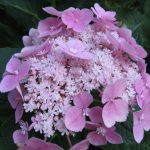
Hydrangea “Endless Summer Twist-n-Shout®”
Like all plants in the Endless Summer® Collection, Twist-n-Shout produces abundant blooms on both old and new wood all summer long. Lacy deep-pink centers are surrounded by gorgeous blossoms of pink or periwinkle blue, depending on soil type. Sturdy red stems and glossy deep green leaves turn red-burgundy in fall to offer year-round interest in the garden. Easy to care for Twist-n-Shout is an elegant stand-alone specimen, dramatic in combination with other plants, and compact enough for containers. 3-4 ft tall and wide.
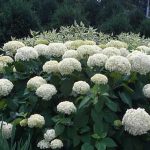
Hydrangea “Incrediball®”
This spectacular improved version of the native Annabelle hydrangea produces huge, full flower heads, as large as 12″ across, and is both reliable and beautiful. Flowers open green, then mature to white before fading to green again. Very sturdy stems hold the blooms upright even if soaked with rain.This very cold hardy shrub blooms on new growth, so even very cold winters won’t keep it from blooming. Deciduous. 4-5 ft tall and wide.
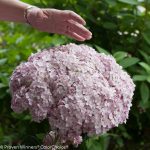
Hydrangea “Incrediball® Blush” PW
This bodacious babe has blush pink blooms. Will bloom every year even after a hard winter and plant can withstand temperatures down to -40F. Makes excellent cut flowers and bouquets. Does well in mass planted landscapes as well as mixed and natural beds. Blush fades to green with age. average height 5′ by 6′.
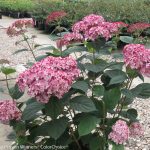
Hydrangea “Invincibelle® Ruby” PW
This gem starts out with dark burgundy buds opening into a lovely two-tone event of silvery pink and ruby. Strong stems make it wonderful in mass plantings as well as cut gardens. Dark green foliage accentuates the blooms on this 3′ by 3′ shrub. Adapts well to most well drained soils. Zones 3-9.
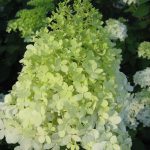
Hydrangea “Limelight”
This beauty has unique bright chartreuse blooms in mid-summer that hold bright and refreshing color right into autumn when the blooms change color to a rich deep pink. The autumn display of chartreuse and pink blooms on the same plant is breathtaking! The color makes a great addition to the garden and it blends wonderfully with all other colors. Use ‘Limelight’, either fresh or dried, in bouquets to make a unique floral design. This is an easy to grow plant with reliable flowering and flower color regardless of soil pH. The flower heads are of good size, ranging from 6 to 12 inches and are held upright on the shrub. The blooms are well distributed making a very nice plant and display.
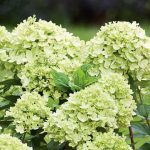
Hydrangea “Little Lime”
A new dwarf form of the ever popular ‘Limelight’ hydrangea, Little Lime sports the same great flowers and coloration as ‘Limelight’ but in a smaller package. At one third the size of traditional hardy hydrangeas, this new variety fits well into any landscape. Summer flowers open soft green and turn pink and burgundy in fall. 3-4 ft tall and wide.
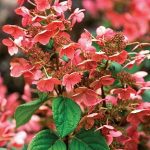
Hydrangea “Quickfire Tree Form”
The tree form of the shrub is trained into a single stem specimen. This hydrangea blooms up to a month earlier than other varieties! White flowers change to pink. Blooms every year. Easy to grow. Easily kept at any height, can grow 6-8 ft. Part to full sun, more watering if in sun.
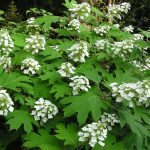
Hydrangea Oakleaf “Snow Queen”
For the shrub border this bold selection is very handsome. It has deeply lobed, oak-like leaves and a profusion of large white blooms. Blooms fade to a deep maroon in the fall and as an added bonus, the foliage turns brilliant crimson in fall. Deciduous. 4-6 ft tall and wide.
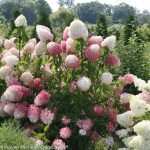
Hydrangea “Zinfin Doll™“ PW
This variety is an early blooming mop head that starts out a delicate white and fades to a lavish pink. It fades from the bottom up giving it a lovely two-tone look. Its strong erect stems make flowers perfect for cut arrangement. Heat tolerant, blooms on new wood. 6′-8′ and hardy to zone 3. Can be used as a focal specimen, border or in mass plantings.
Hydrangea 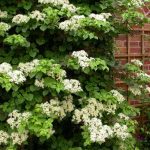 - Climbing
Vigorous, climbing vine, clings to surfaces by aerial rootlets. Slow-growing shrubby habit until established, then long stems are produced. Magnificent white lace cap blooms. Deciduous. Shade to partial sun.
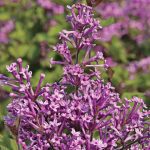 Lilac “Bloomerang®” PW
A wonderful reblooming lilac that blooms from spring to frost. Small habit fits into any garden. Long stems make for a good cutting flower. Very fragrant and deer resistant to boot! 4-5 ft if left natural but easily trimmed to 3 ft.
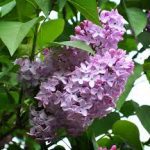
Lilac “Common”
Perfect, fragrant, purple flowers borne in large terminal panicles, singles and doubles. Growth habit is an upright leggy shrub with an irregular outline. 8-12 ft by 6-12 ft. Young bark is green-brown, older bark is gray-brown. Root system is shallow and dense.
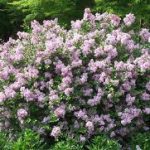
Lilac “Dwarf Korean”
A dwarf, spreading lilac with reddish-purple buds opening to pale lilac fragrant flowers. Blooms profusely in mid-season, typically mid-May and first flowers at an early age. Use in shrub border with evergreen background or plant in groups to form a low hedge. Deciduous. Dwarf, spreading habit 4 to 5 ft. tall, 5 to 7 ft. wide.
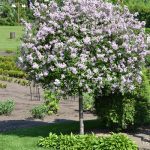
Lilac “Dwarf Korean (on Standard)”
A dwarf, spreading lilac on a standard to create a small tree. Has reddish-purple buds that open to pale, fragrant flowers. Blooms profusely in mid-season, typically mid-May and first flowers at an early age. Use in shrub border with evergreen background or plant in groups to form a low hedge. Deciduous. Tree stem wont get any taller but will continue to widen. The shrub on top can be kept as small as need be, but can get 4 to 5 ft. tall and 5 to 7 ft. wide.
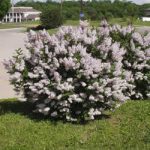
Lilac “Miss Kim”
Deep purple buds open to abundant clusters of highly fragrant, lavender blue flowers. Blooms later than others, extending the season. Upright, compact form. Deep green foliage is burgundy-tinged in fall. Performs well in warmer southern regions, with excellent resistance to powdery mildew. Great for border accent or mass planting. Deciduous. Reaches 6 to 8 ft. tall and wide, slightly larger with age.
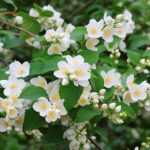
Mock Orange “Dwarf”
Dwarf deciduous shrub with natural vase shape. Dense branches are covered by fragrant double flowers for a delightful spring landscape accent. Extremely fragrant!! Cut branches are great for arrangements. Moderate growing to 3 to 4 ft. tall and wide.
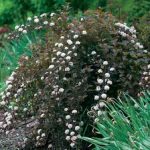
Ninebark “Summer Wine®” PW
Easily grown in average, dry to medium moisture, well-drained soil in full sun to part shade. Tolerates a wide range of soil conditions. Prune as needed immediately after bloom. Plants may be cut close to the ground in winter to rejuvenate. White flowers in late spring early summer. Peeling bark gives winter interest. 4-6 ft tall and wide.
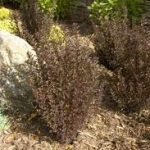
Ninebark “Little Devil™”
A compact upright shrub with burgundy leaves; features small pinkish-white spirea-like flowers followed by subtle reddish fruit, and interesting peeling papery bark; extremely tough and durable, good for massing or general garden use. Showy clusters of white flowers in early summer. It has burgundy foliage throughout the season. The small leaves turn purple in fall. It produces red capsules from early to mid fall. The peeling tan bark adds winter interest. 4 ft tall by 3 ft wide
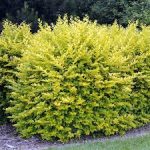
Privet “Golden Vicary”
An excellent upright deciduous shrub best used for hedges. White flowers adorn this beauty mid summer. Bright golden foliage lasting all season, especially when planted in full sun and turns purple in the fall. Plant with green-leaved plants for a pleasant contrast. Can be rejuvenation pruned when out of control. Fast grower to 8 to 10 ft. tall and wide.
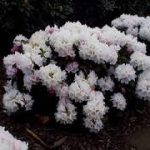
Rhododendron “Cat. Album”
Pink buds open to clusters of soft white blooms with yellow blotches. Dark glossy semi-evergreen leaves accent this May bloomer. Acid loving likes sun to light shade. 6′ to 8′ tall and wide. best used as a specimen or planted in mass or as a hedge. Zones 4-8.
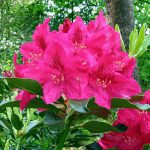
Rhododendron “Nova Zembla”
An excellent choice for a foundation or accent planting. Buds emerge a deep burgundy and open to a vibrant dark pink with leopard spots. Does well in partial sun averaging about 5′. Semi-evergreen does best with protection from winter wind. Zones 4-8.
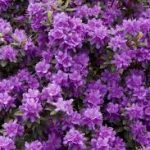
“Ramapo” Rhododendron
Dense-growing evergreen shrub has very dwarf compact habit. Large trusses of showy flowers are a beautiful contrast to the leaves. Prefers cooler regions. Very effective when a smaller accent is needed. 3′ Tall & 4′ Wide
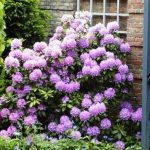
Rhododendron “Roseum Elegans”
A vigorous grower “Roseum Elegans” does well in cooler climates. Flowers open a lilac-rose in spring and accentuated by dark, glossy evergreen leaves. Moderately sized at 6′-8′ this rhododendron will need winter wind protection and a little more water during intense heat. Plant in partial shade for best results. Zones 4-8.
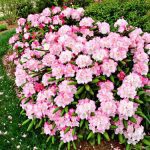
Rhododendron “Yaku Prince”
This royalty is a herald of spring with a lovely two-tone extravaganza of blooms. Dark fushia blossoms fade to a soft pink with darker blushed margins. Lanced with olive-green leaves and a compact size this gallant knight is perfect for borders, mass planting or on a forests edge. “Yaku Prince” averages a 3′ garden size and enjoys partial shade. Plant in an area protected from heavy wind with acidic soil. Zones 5-9.
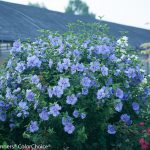
Rose of Sharon “Blue Chiffon™” PW
Grand blue flowers are accentuated with ruby. Deer resistant and tolerant of different soil types this beauty makes a wonderful landscape and border planting attracting both butterflies and songbirds. Also may be used as a living fence in sunny locations. 8′-12′ high and 4′-6′ wide. Can be trimmed to stay in containers. A PROVEN WINNERS® selection.
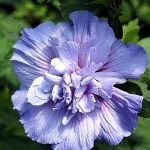
Double Purple ‘Ardens’ Rose of Sharon
Large blue flowers in late summer. A very adaptable and easy to grow shrub. Attracts butterflies and hummingbirds. Heat & drought tolerant. Reaches 8 to 12 ft. tall and 4 to 6 ft. wide.
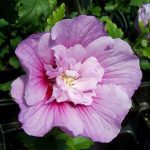
Rose of Sharon “Lavender Chiffon™” PW
Large, single lavender flowers adorned with lacy centers create anemone-like blooms. This hardy shrub adds valuable color in late summer. Beautiful in large containers, as a colorful hedge, or pruned into a small tree. Reaches 8 to 12 ft. tall and 4 to 6 ft. wide. A PROVEN WINNERS® selection.
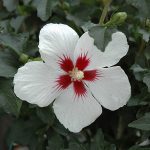
Rose of Sharon “Lil’ Kim™” PW
A unique dwarf variety with dainty little white flowers punctuated with a showy red eye. Late summer flowers last for up to three days instead of the typical one of most Rose of Sharon. Lovely in containers or as a hedge or specimen. Reaches 3 to 4 ft. tall and wide.
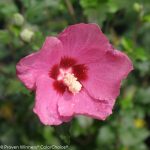
Rose of Sharon “Lil’ Kim™ Red”PW
A carmine-red version of the traditional “Lil’ Kim.™” This compact beauty is an instant attraction for hummingbirds and butterflies. Dark green leaves accent this summer bloomer making it great for containers and beds. Prefers sunny locations and averages 3′-4′. Super easy to maintain.
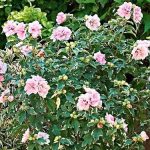
Rose of Sharon “Sugar Tip®“
A lovely variegated variety with leaves that are blue-green with white edges. Crystal pink double blooms are accented by a wine colored center making this shrub oh-so-sweet. Growing to 6′ high and 4′-6′ wide makes this sweetie perfect for screens, borders and patio containers. Blooms on new wood and can take many different soil types (excluding excessively moist areas) and can be trimmed in early spring or late fall. Zones 5-8.
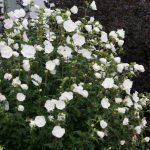
Rose of Sharon “White Chiffon™” PW
Huge, pure white blossoms adorn this beauty in late summer. Rose of Sharon shrubs are very drought tolerant and can be grown as a single specimen or in a hedge. Deciduous. 10 ft tall by 6 ft wide. A PROVEN WINNERS® selection.
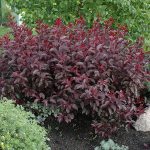
Sandcherry (Purpleleaf)
Also called a Cistena Cherry. Flowering and leaf color generally occur in full sun. Tolerates urban conditions. Good soil drainage is essential. Prune as needed after flowering. Can may be trained as a small tree. Notable for its red-purple foliage that retains good color throughout the summer and pink cherry blossoms in spring. 6-10 ft tall by 5-8 ft wide.
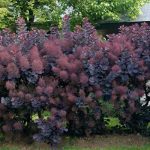
Smokebush “Royal Purple”
One of the most charming plants for spring-to-fall beauty, it’s foliage opens warm red, then deepens to a rich purple in summer and finally burnishes golden-orange in fall! Feathery purple plumes of flowers appear in midsummer, topping the stunning leaves with soft clouds of color. 10 feet high and wide. Full sun to part sun.
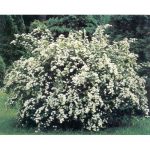
Spirea “Snowmound”
Vanhoutte spirea (also commonly called bridalwreath) is a vase-shaped, deciduous shrub with branching that arches gracefully toward the ground.Easily grown in average, medium moisture, well-drained soils in full sun. Tolerates light shade, a wide range of soils and some drought. Prune as needed immediately after flowering. 3-5 ft tall and wide
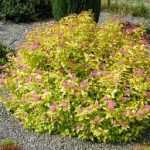
Spirea “Goldmound”
Vibrant golden spring foliage, accented by clusters of pink flowers, cools to a yellowish green in summer then a rich, yellowish orange in fall. Great color addition to the shrub or perennial border or for brightening the container garden. Deciduous. Lightly prune after flowering for another display of blooms. Can be pruned dramatically in the fall. Moderate growth to 2 to 3 ft. tall and 4 ft. wide.
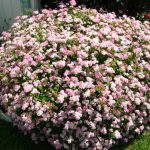
Spirea “Little Princess”
Easily grown in average, medium, well-drained soil in full sun. Tolerates a wide range of soils. Remove faded flower clusters to promote additional bloom. Prune in late winter to early spring. Upright, rounded, deciduous shrub which typically forms a compact mound. Features numerous pink flowers in flat-topped clusters in late spring to mid-summer. If pruned lightly after flowering another display of blooms will appear. Attractive to butterflies. Oval, sharply toothed, mint green leaves take on attractive red hues in autumn. 1.5-2.5 ft tall by 2-3 ft wide
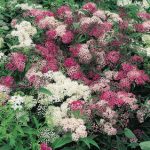
Spirea “Shirobana”
Small deciduous shrub with bright green leaves on slender stems. White, pink and red bloom clusters cover this dwarf, dense, mounded plant. Remove faded flower clusters to promote additional bloom. Can be pruned severely to avoid a leggy appearance. Wonderful for border accent, specimen or low hedges. 2 to 3 ft tall and wide.
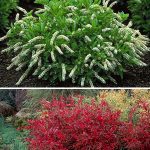
Sweetspire “Henry’s Garnet”
This gem likes sun to partial shade. A fragrant summer bloomer with lovely arching white blooms. Tolerant to wet areas this shrub can handle multiple soil types. Fall color is emphasized by shades of amber, citrine, garnet and ruby depending on sun exposure. Averages 3′-4′ high and 4′ or more wide.
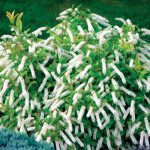
Sweetspire “Little Henry®” PW
This compact Sweetspire starts out the summer with a beautiful display of fragrant white flowers that blanket the shrub. As summer progresses shiny, disease-free foliage appears until fall when the foliage turns a stunning garnet-red. Perfectly suited for covering large banks, beds and borders. Good for sun or shade. 2-3 ft tall and wide.
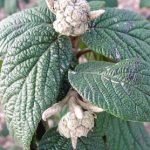
Viburnum “Allegheny”
Attractive, dense upright grower makes a great hedge, screen or windbreak. Large clusters of fragrant white flowers followed by showy red fruit that matures to black. Semi-Evergreen up to 10 feet tall. Deciduous below 0 Fahrenheit. Follow a regular watering schedule during the first growing season to establish a deep, extensive root system. Feed with a general purpose fertilizer before new growth begins in spring. For a tidy, neat appearance, shear annually to shape. Pruning time: late winter or early spring.
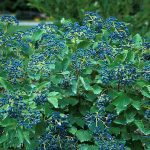
Arrowwood Viburnum “Blue Muffin®”
More compact than other Arrowwood viburnum, it fits easily into the residential landscape. Easy to grow, with little or no maintenance required, Blue Muffin adapts to most locations with full sun to partial shade. Clean white flowers make for a crisp contrast with the glossy green leaves in early to mid-summer. The remarkably intense blue fruit that inspired the Blue Muffin name appear in late summer and fall. The fruit add interest to the fall landscape, and attract songbirds to the garden. 6-8 feet tall and wide. Berries are not edible.
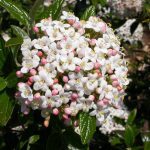
Viburnum “Fragrant Snowball”
Prized for its clusters of pinkish-white, fragrant flowers with gardenia-like fragrance. Upright, fully branched form well suited as a hedge, screen or accent plant. Evergreen to semi-evergreen. Moderate grower, upright habit to 6 to 12 ft. tall, 6-10 ft. wide. For a tidy, neat appearance, shear annually to shape. Pruning time: late winter or early spring.
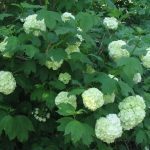
Viburnum “Eastern Snowball”
Masses of pure white, snowball-like flower clusters make a showy display. Bright green leaves have a purplish-red fall coloring. Spectacular landscape specimen. Deciduous. Moderate grower to 12 ft. tall, 10 ft. wide, larger with age. Follow a regular watering schedule during the first growing season to establish a deep, extensive root system. Feed with a general purpose fertilizer before new growth begins in spring. For a tidy, neat appearance, shear annually to shape. Pruning time: summer after flowering.
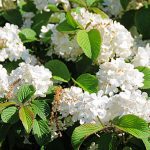
Viburnum “Japanese Snowball”
Dense, upright, multi-stemmed, deciduous shrub that typically matures to 10-15 feet tall and as wide. Foliage may turn burgundy red to purplish red in fall. Easily grown in average, medium moisture, well-drained soil in full sun to part shade. Prefers moist loams, but tolerates a wide range of soils and has good drought tolerance. Prune as needed immediately after flowering.
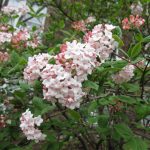
Viburnum “Juddi”
It is a rounded deciduous shrub that typically matures to 6-8 foot tall and wide. It is noted for its fragrant white flowers in spring, quality dark green foliage, black fruit in fall and purple fall color. Easily grown in average, medium moisture, well-drained soil in full sun to part shade. Prefers moist loams, but tolerates a wide range of soils. Mature plants generally have some good drought tolerance. Prune as needed immediately after flowering, however pruning off spent flowers will eliminate summer fruit display, which admittedly is not overly showy for this hybrid.
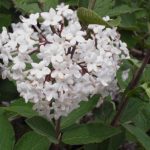
Viburnum “Korean Spice” – Large clusters of spicy-scented, waxy pink flowers fade to white. Bright red berries fade to black in fall. Foliage becomes red and burgundy in autumn. Plant in the shrub border, back of perennial beds and foundation plantings. Deciduous. 4-6 feet tall and wide.
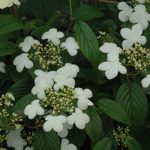
Viburnum “Summer Snowflake”
Broadly rounded form to this medium size shrub. Its tiered horizontal branches magnificently display the large, flat flower clusters. Red fruit in fall is very ornamental. Deciduous. Up to 6 foot tall and wide. Follow a regular watering schedule during the first growing season to establish a deep, extensive root system. Watering can be reduced after establishment. Feed with a general purpose fertilizer before new growth begins in spring. Pruning time: summer after flowering.
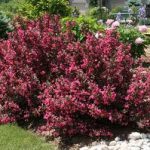
Weigela “Wine & Roses®”
Gorgeous pink flowers erupt late spring to contrast with the dark burgundy foliage. Prefers well-drained soils but fairly adaptable to other soil types. It is best to prune immediately after flowering. Will flower sporadically on current season’s growth. Medium moisture. Full sun 4-6 ft tall and wide.
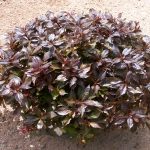 Weigela “Midnight Wine®” PW
Ideal for the front of the border or for edging the perennial bed. This tidy mound of dark burgundy-purple leaves can be used as an accent plant or a dramatic mass planting. It may produce a light crop of pink flowers in spring. Midnight Wine is maintenance free and needs no pruning because its habit is perfect the way it is. Full sun.Prefers well-drained soils but is extremely adaptable to other soil types. Medium moisture.This is a slow growing plant and may need a year in the landscape before it grows noticeably. 12 inches by 18 to 24 inches.
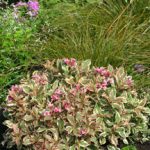 Weigela “My Monet®“PW
Gorgeous variegated leaves tinged pink with bright pink trumpet flowers in late spring. Mounded habit sits close to the ground. Prefers well drained soil but is adaptable to many soil types. It is best to prune right after flowering ceases, but pruning is rarely needed. Slow growth rate. Will continue to flower sporadically on the current season’s growth. Medium moisture. Browning leaves in early fall are a result of the plant going into dormancy earlier than most weigela. This is a benefit letting the plant shut down earlier and prepare for winter. 12-18 inches.
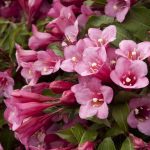 Weigela “Minuet”
Enjoy a spectacular display of rosy-pink blooms against a backdrop of purple-tinged foliage. Use to add color in shrub borders or as a garden accent. Deciduous. 3 ft tall by 5 ft wide.
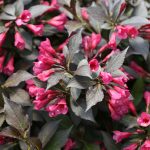 Weigela “Spilled Wine®” PW
This beauty has dark red, wavy leaves and a spreading habit. Its hot pink-magenta flowers and dark foliage is similar to those of Wine & Roses and Midnight Wine, but this is gem is right in the middle as far as size growing 2-3 ft in height and width! This purple leaved variety will not fade to green like some older selections. The tubular flowers are adored by hummingbirds, butterflies, and all your other favorite pollinators!
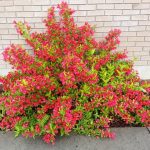 Weigela “Red Prince”
Compact, mounding shrub displays rich-red flowers featured against dark green leaves. Useful in a background planting, flowering screen or in shrub borders. Prune after blooming for sporadic rebloom. Deciduous. Moderate grower to 5 to 6 ft. tall and wide.
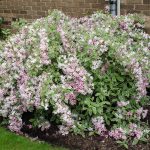
Weigela “Variegata”
Charming pink trumpet flowers will smother these plants in late spring to early summer and again in fall. The blooms continue all summer long, enhanced greatly by the distinctive green and white foliage. Attracts hummingbirds to your yard. Extremely hardy plants thrive under almost any condition, have a naturally dense habit and respond well to light pruning. Full sun. 4-6 ft tall and wide. Deer resistant.
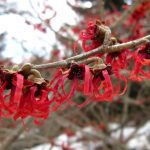 Witch Hazel “Diane”
‘Diane’ is a red-flowered form with spreading branches. It typically grows to 8-12’ tall and to 10-15’ wide over 10 years. It is noted for its winter-blooming, mildly fragrant, red to copper-red flowers. Broad-oval green leaves turn attractive shades of yellow, orange and red in fall.
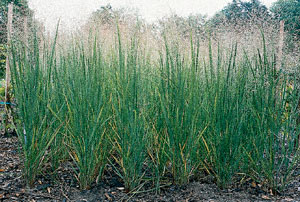
 Big Bluestem sp.
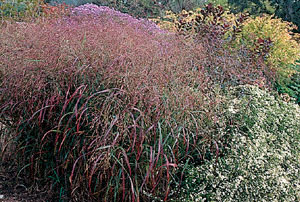
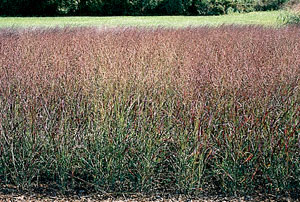
 Little Bluestem 'Smoke Signal'
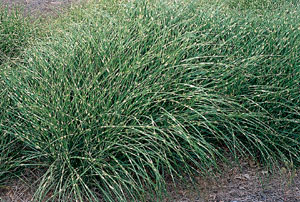
 Carex 'Banana Boat'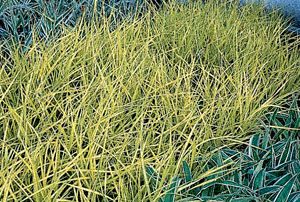

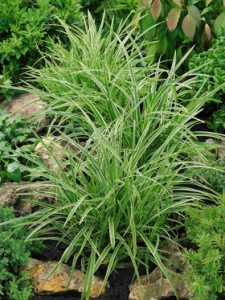 Carex 'Ice Dance'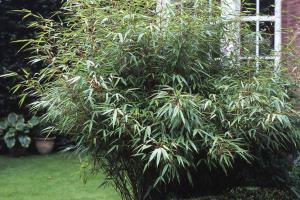
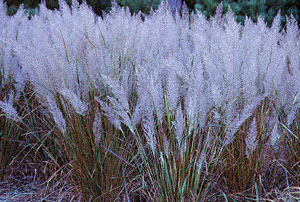
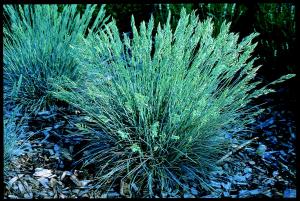
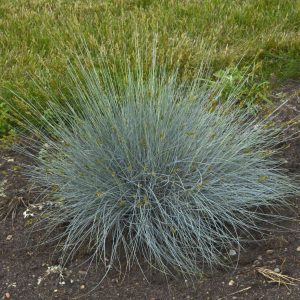 Fescue 'Blue Wiskers'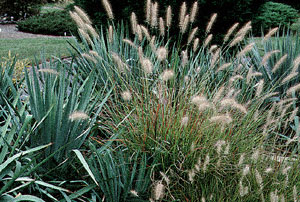
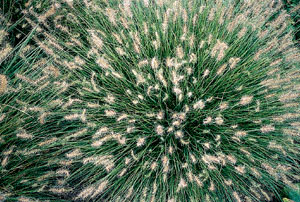





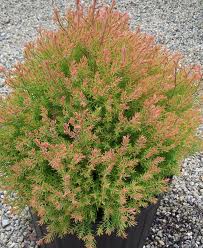

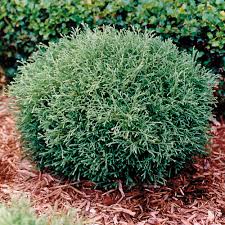


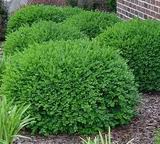
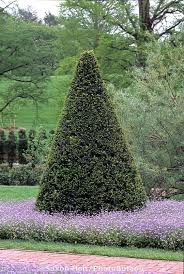
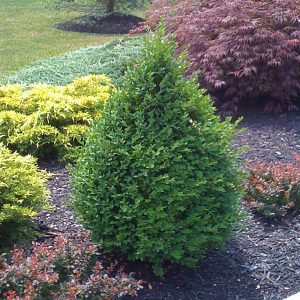 Boxwood "Green Mountain" - Moderate growing to 4 ft. tall but narrow 2'-3'wide. We offer some lovely pyramidal shaped along with untrimmed for your needs. Can be used in a formal garden or trimmed into a hedge or maze. Bright green broad-leaf foliage is a wonderful break spruces and pines. Works well to soften corners and stonework.